
Do you believe a portable cooler can quietly transform your sleep without blasting cold air across the room? In 2026, the top picks blend low noise, multi-speed fans, and compact night-friendly designs, from evaporative models with 8–10 hour runtimes to windowless units with remote controls. They offer wide vents, easy water access, and energy efficiency under 60 dB, plus extras like LED nightlights and ice-pack boosts. Stay with me as we compare the best options for your calm, cool nights.
Key Points
- Prioritize evaporative coolers with multiple quiet modes (Sleep/Natural) and low noise under 40–60 dB for uninterrupted sleep.
- Choose compact, lightweight units with top-fill water tanks and easy refills to minimize nighttime disruptions.
- Look for adjustable airflow with multi-directional vents and wide-angle oscillation to evenly cool a sleeping area.
- Favor models offering long runtimes per fill (8–10 hours) and larger tanks, reducing frequent refills overnight.
- Check energy use (low wattage, energy-efficient) and include ice packs or cold-water boosts to maximize cooling without extra cost.
Arctic Air Pure Chill 2.0 Evaporative Cooler (Blue)
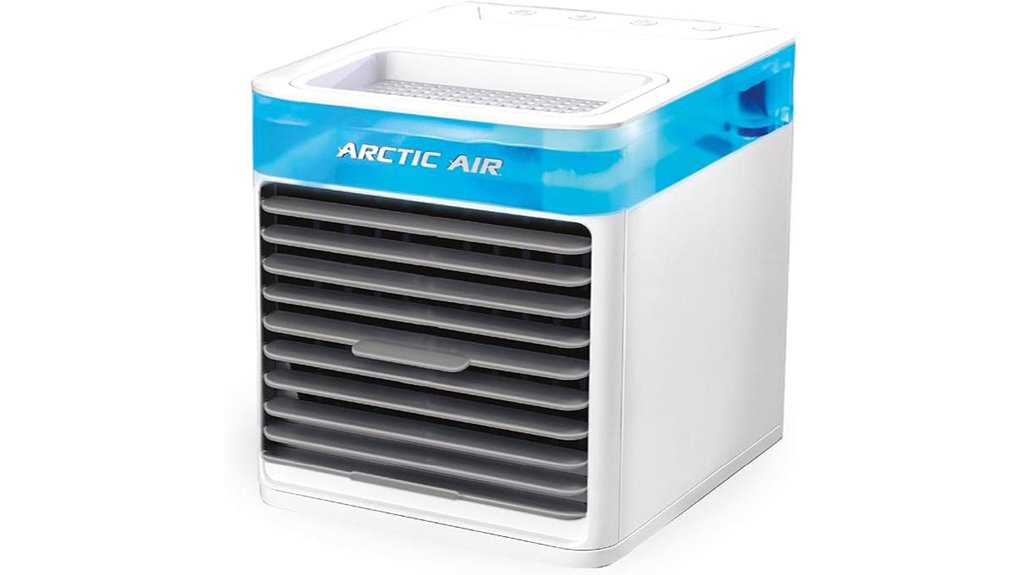
The Arctic Air Pure Chill 2.0 Evaporative Cooler stands out if you’re looking for an energy-savvy personal cooler that doubles as a humidifier. You get a compact, portable design that fits on a desk, nightstand, or counter, plus multi-directional vents for adjustable airflow. Powered by 120 volts and using just 8-10 watts, it runs up to 10 hours depending on speed, room temperature, and humidity. Top-fill water tank makes refills simple, and four touch speed settings keep cooling customizable. It also doubles as a nightlight with seven color options, suitable for bedrooms, offices, and small living spaces.
Best For: Those seeking a compact, energy-efficient personal cooler for desks, bedrooms, or small living spaces that also functions as a lightweight humidifier.
Pros:
- Very low power usage (8-10 watts) and 120V operation for easy plug-in use.
- Compact, portable design with multi-directional vents and top-fill water tank.
- Four touch speed settings plus a built-in 7-color LED nightlight for ambiance.
Cons:
- Limited cooling to personal space rather than a full-room climate control.
- Requires periodic water refills for extended use (up to 10 hours).
- Effectiveness dependent on room temperature and humidity; performance may vary in very humid or very dry conditions.
FLOWBREEZE Windowless Portable Air Conditioner with Remote
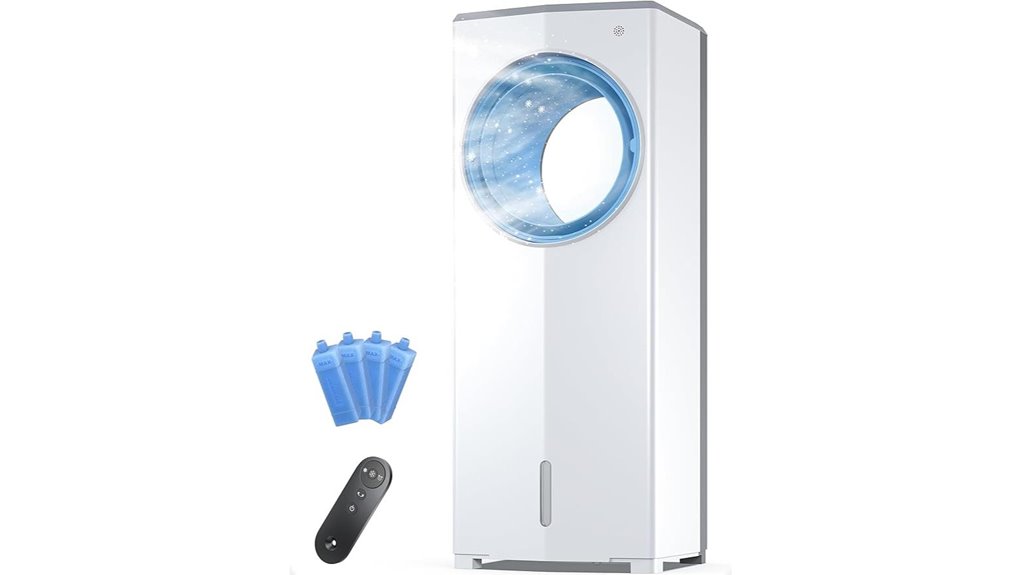
If you need a windowless solution that won’t disrupt a sleeping routine, the FLOWBREEZE Windowless Portable Air Conditioner with Remote is a solid pick. This 26″ evaporative cooler fits rooms without windows, offering 3 speeds and 4 modes (Cool, Sleep, Eco, Natural) plus a 7-hour timer and remote. It runs ultra-quiet, under 40 dB, so you won’t be bothered while you rest. Includes 4 ice packs to boost cooling in heat, and uses freestanding ABS construction in white/gray. Dimensions are 9.84″ D × 10.24″ W × 26″ H; warranty is 1 year with customer support.
Best For: Best For sleepers and small rooms without windows who want a quiet, windowless cooling option with remote control.
Pros:
- Ultra-quiet operation (under 40 dB), ideal for bedrooms and offices
- Windowless design fits rooms without windows and includes 4 ice packs for enhanced cooling
- Lightweight, freestanding ABS construction with remote and multiple modes (Cool, Sleep, Eco, Natural)
Cons:
- Only 26″ tall; may have limited cooling coverage in larger spaces
- Evaporative cooling may be less effective in very dry climates or extremely hot conditions
- 3 speeds and 4 modes provide versatility but fewer options than larger portable AC units
Ontel Arctic Air Turbo Chill Evaporative Cooler
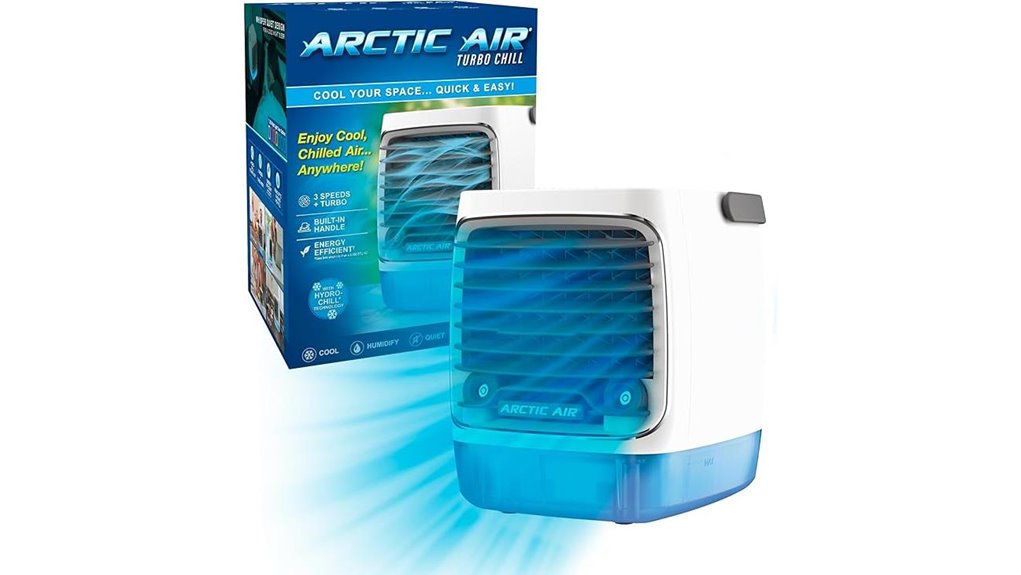
For a compact, budget-friendly option that still delivers real cooling, the Ontel Arctic Air Turbo Chill Evaporative Cooler stands out with its HydroChill technology and built-in mist control. You’ll get four speeds—Low, Medium, High, Turbo—with mist control and a 7-color LED night light. Its portable, compact design includes a carry handle and wide-angle oscillation for directed airflow. This ETL-listed unit runs efficiently, cooling for up to about eight hours per fill and humidifying the air as it evaporates water. Use it indoors, monitor the tank with a quick-view window, and enjoy energy savings versus a 6,000 BTU AC.
Best For: Those seeking an affordable, portable personal cooling solution for small spaces like bedrooms, desks, and dorm rooms.
Pros:
- Compact, lightweight design with a built-in carry handle for easy portability
- HydroChill evaporative cooling with mist control and multiple fan speeds
- Energy-efficient operation that uses less power than a 6,000 BTU AC and humidifies air
Cons:
- Best suited for small to medium rooms; less effective in very humid environments
- Requires regular water filling and tank monitoring; run time varies by speed and conditions
- Only suitable for indoor use and personal spaces; limited cooling range compared to traditional ACs
DREO Portable Mini Air Conditioner with Oscillating Fan
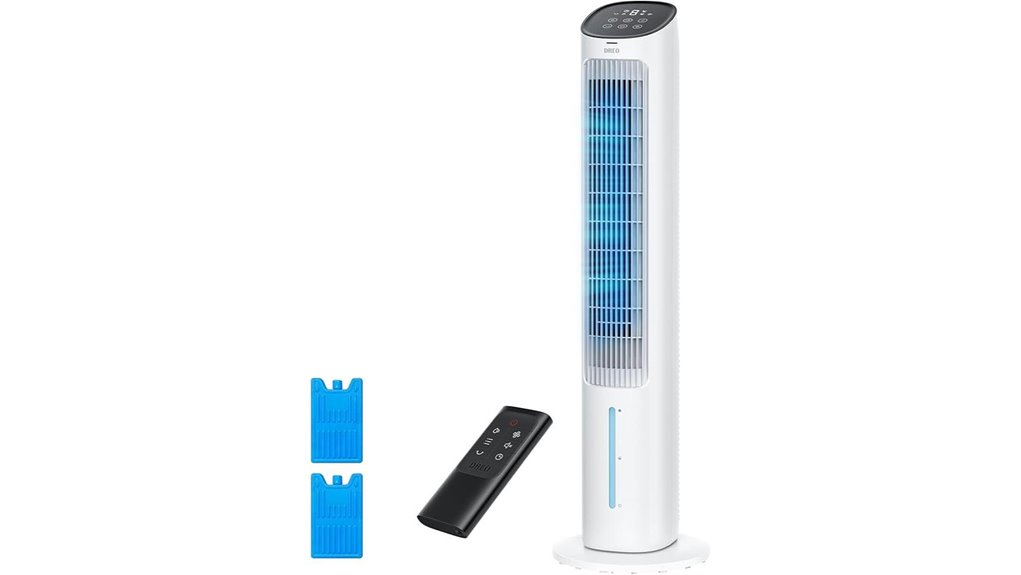
DREO’s Portable Mini Air Conditioner with Oscillating Fan is ideal if you want quiet, circulating relief at night or in small spaces. You’ll experience ultra-quiet cooling with a 35dB cross-flow impeller, so sleep or work stays undisturbed. This tower unit sends cool air through humid cooling pads, delivering comfortable humidity as it recirculates, thanks to 80° oscillation and speeds up to 22 ft/s. It covers more area with up to 13,000 CFM per hour and features a remote, 4 speeds, a 7-hour timer, a removable water tank, and ice packs for boosted chill. Maintenance is simple with easy-clean components.
Best For: Those seeking ultra-quiet, portable cooling for small to medium spaces where quiet operation is a priority.
Pros:
- Ultra-quiet operation at about 35dB, ideal for sleep or work
- Portable with 80° oscillation and speeds up to 22 ft/s for wide-area coverage
- Removable water tank, easy-to-clean components, and included ice packs for boosted cooling
Cons:
- May be best suited for smaller rooms; large open areas might require multiple units
- Requires regular maintenance of water tank and cooling pads for optimal performance
- May be less effective in very hot, dry environments without adequate humidity levels
SereneLife Evaporative Tower Cooler with Remote
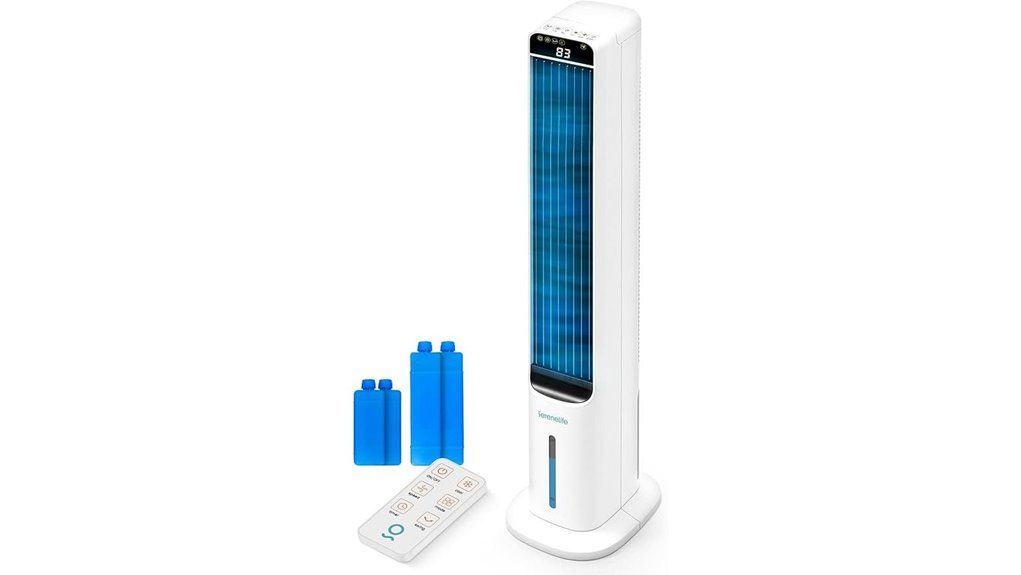
The SereneLife Evaporative Tower Cooler with Remote is ideal if you want portable, energy-efficient relief from warm rooms without loud, full-house cooling. You get a 5L tank and 4 reusable ice boxes to boost cooling, plus 3 speeds and 60° oscillation for targeted comfort. Its washable dust filter keeps air clean, while top-mounted touch controls and a remote simplify use. With an 80W draw and under 60 dB noise, it’s a quiet, low-energy option for bedrooms, offices, or dorms. Lightweight and easy to move, it delivers evaporative airflow up to about 1000 m³/h.
Best For: Home, office, or dorm rooms in dry, warm climates seeking portable, energy-efficient evaporative cooling with quiet operation.
Pros:
- Lightweight, portable design with easy room-to-room movement
- Low energy consumption (80W) and quiet operation (under 60 dB)
- Includes 5L tank, 4 reusable ice boxes, washable dust filter, and remote control
Cons:
- Evaporative cooling effectiveness depends on dry climate and may be less effective in humid areas
- 1000 m³/h airflow may be insufficient for larger rooms or open floor plans
- Requires regular water maintenance and ice box replacement for optimal cooling
Factors to Consider When Choosing Portable Room Cooler for Sleep
When you pick a portable room cooler for sleep, start by weighing noise levels, cooling capacity, and power efficiency to fit your nightly rhythm. Consider portability and size so it fits your space, and check the water tank longevity to avoid constant refills. These core factors help you balance comfort, runtime, and convenience for smoother, sounder nights.
Noise Levels
Ever wonder how quiet is quiet enough for a good night’s sleep? Noise levels are measured in decibels (dB) and tell you how intrusive the cooler will be during slumber, with lower numbers preferred for a quiet environment. Some models advertise ultra-quiet operation (under 40 dB) to minimize disruption. Fan speed settings, typically 3–4 speeds or modes, affect noise, with lower speeds usually producing less sound. Oscillation and air-flow features can influence perceived noise, since moving air may create white-noise-like sounds at higher speeds. Remote controls and night lighting add minor ambient sounds or LED activity, which may impact sleep for light sleepers. Prioritize a model that balances cooling needs with subdued noise to preserve restful sleep.
Cooling Capacity
Choosing the right cooling capacity for sleep-focused portable coolers means matching room size and comfort needs. For compact devices, expect room coverage and temperature drop targets rather than whole-home performance. Evaporative coolers rely on humidity and airflow, so pick a unit with adjustable fan speeds to prevent overcooling while you sleep. Look for multiple speed settings—low, medium, high, turbo—to tailor quiet airflow for nighttime use. Some models advertise run times per fill, such as up to 8–10 hours, helping you plan sleep without constant refills. A low noise level matters, typically under 40–60 dB, so you enjoy uninterrupted rest while the device sustains steady comfort. Prioritize a balance of effective cooling and silent operation.
Power Efficiency
Power efficiency matters for sleep, so look for models labeled energy-efficient with low wattage—typically 8–80 watts—that still deliver 8–10 hours per fill or per cycle. In moderate humidity, prefer evaporative cooling units over traditional AC to cut electricity use while keeping you comfortable through the night. Check the stated energy use per hour and compare it to the expected run time on your chosen speed to estimate total overnight energy consumption. Opt for devices with multiple speed settings and modes (Sleep, Natural) to tune quiet operation and minimize power at night. Favor units with ice packs or water tank monitoring, which boost cooling efficiency without driving up power usage. Choose efficiency without sacrificing cooling consistency or noise levels.
Portability And Size
What size and portability matter most when you’re cooling a sleep space? You want a compact, lightweight unit with a portable form factor and a built-in carry handle or easy-moving design so you can relocate it between rooms or use it near your bedside. Check its footprint and height to ensure it fits on a nightstand, desk, or small shelf without obstructing sleep. Look for multi-directional vents or oscillation to evenly distribute cool air in a small sleeping area. Verify the water reservoir is easy to refill and that top-fill designs reduce frequent interruptions during the night. Prefer models with simple, intuitive controls and a quiet operation profile to minimize sleep disturbances.
Water Tank Longevity
A bigger water tank means longer runtimes between fills, so you can run the cooler overnight without constant refills. Water tank longevity describes how many hours you get per fill at a given speed. Larger capacity directly extends runtime, reducing nighttime refill frequency, especially with top or bottom filling ports. Many models offer a quick-view or transparent tank window, helping you monitor water levels and avoid unexpected shutdowns. You can use ice packs or cold water to briefly boost cooling duration, but be aware evaporation may rise and shorten the effective runtime between fills. Regular maintenance matters too: clean the tank and pads to prevent blockages that hurt efficiency and force you to add water more often. Prioritize tanks that balance capacity with easy access.
Airflow Direction
When selecting a portable room cooler for sleep, consider how the airflow direction will affect comfort and efficiency. Multiflow or adjustable vents let you direct cool air toward or away from you, shaping how coolness feels as you drift off. Wide-angle oscillation distributes air across the room, reducing hot spots and improving uniform cooling for a sleeper. Personal or compact units with targeted nozzle adjustments help aim cool air precisely at a bed or seating area, so you won’t wake from drafts. Units with multiple speed settings enable fine-tuning of airflow direction alongside volume for quieter, sleep-friendly operation. Proper airflow direction minimizes drafts across the bed, reducing wake-ups while maximizing cooling efficiency.
Sleep Features
Sleep features matter just as much as airflow direction when you’re choosing a portable room cooler for nights at home. To minimize disruption, look for a sleep-friendly noise level, ideally under 40–60 dB. Choose modes like Sleep or Natural that gradually adjust airflow to keep comfort steady through the night. A night light or dim LED indicators are fine if they offer adjustable brightness or color options to reduce light exposure. A timer feature (7-hour or auto-off) helps ensure the device powers down after you’ve fallen asleep. Overnight humidity control is beneficial, since evaporative cooling can humidify the air and improve throat and nasal comfort during sleep. Prioritize these sleep-focused features to enhance rest without waking.
Maintenance Needs
Maintenance matters more than you might think, so choose a portable room cooler with straightforward upkeep. Look for a removable, easy-to-clean water tank and washable dust filters to keep airflow quality high and maintenance simple. Clear water level indicators or quick-view windows help you avoid mid-sleep refills. Prefer units with accessible cooling pads or transparent components that you can rinse or replace without tools. Easy-to-remove ice packs or coolant accessories let you boost cooling without disassembly. Check for simple maintenance reminders or automatic shutoff features when the water runs low to prevent dry-running and extend the unit’s life. A design prioritizing effortless upkeep saves you time and preserves cooling performance.
Common Questions
Do Portable Coolers Affect Sleep Apnea or Snoring?
Yes, portable coolers can affect sleep apnea or snoring, but effects vary. If you use them to cool the room and reduce humidity, you may breathe easier and snore less. However, they can also dry nasal passages or irritate airways if overused. Choose models with adjustable humidity, a quiet, safe setting, and proper airflow. Always monitor how you sleep and consult a clinician if you have persistent apnea symptoms or snoring.
Which Model Is Quietest for Light Sleepers?
You’ll want the model that minimizes fan noise, and yes, it’s the quietest. Look for those labeled “whisper-quiet” or under 30 dB at lowest speed. In practice, you’ll notice smoother operation from models with brushless motors and dual-frequency controls. If you’re a light sleeper, choose a unit with a low-high turbine range, auto-swing vents, and a sleep timer. Pair it with a white-noise app, and you’ll drift off easier.
Can These Units Improve Humidity Without Mold Risk?
Yes, these units can improve humidity without mold risk if you use them correctly. Choose models with built-in humidifiers or compatible water tanks, and monitor moisture levels with a hygrometer. Run the cooler in cooler, drier rooms and clean the reservoir regularly to prevent mold growth. Use distilled water, keep the fan speed moderate, and avoid over-humidifying. Regular maintenance keeps humidity comfy and mold-free while you sleep.
Are There Battery-Powered Options for Blackout Conditions?
Yes, there are battery-powered options for blackout conditions. Look for portable evaporative coolers and fan-and-breeze setups with built-in rechargeable packs. Choose models that specify run-time on battery, quick-change filters, and adjustable airflow. You’ll want low energy use and a marked safety rating for indoor use. Keep a spare power bank and consider a unit with auto shutoff when the battery depletes. If you need longer run times, pair it with a solar charger.
How Effective Are They in High-Humidity Climates?
They can help, but high humidity reduces their effectiveness. If the air is saturated, a portable cooler’s evaporative cooling works best in drier conditions, so you’ll notice less chill and slower moisture removal. To maximize comfort, pair it with a dehumidifier or use it in a well-ventilated space, keep a fan circulating, and choose models with higher airflow and built-in humidity control. Expect cooler temps when humidity is moderate, not extremely humid.