
If you’re cooling a tent on the go, these portable evaporative coolers in 2026 mix compact design with real efficiency, USB power options, and dual-tank setups for longer run times. You’ll want multi-speed fans, optional mist modes, and quiet operation that won’t wake the camp. Some models also offer 3-in-1 or 4-in-1 functionality and easy portability. The key is balancing tank size, weight, and power flexibility—but there’s more to consider that could change how you stay comfortable.
Key Points
- Pick portable evaporative coolers with dual 600–1000 mL tanks for extended, refill-friendly runtimes in tents.
- Prioritize USB-powered units (5V/2A) with optional power bank compatibility for true tent portability.
- Ensure adjustable wind/mist modes and optional ice-infusion or Hydro-Chill for fast targeted cooling in dry environments.
- Look for quiet operation (around 50–60 dB), safety features, and lightweight, handle-equipped designs for easy tent use.
- Favor 3-in-1/4-in-1 models offering evaporative cooling, humidification, and ambient lighting in a compact, freestanding form.
Portable Air Conditioner with Dual Tank, USB Powered Cooler
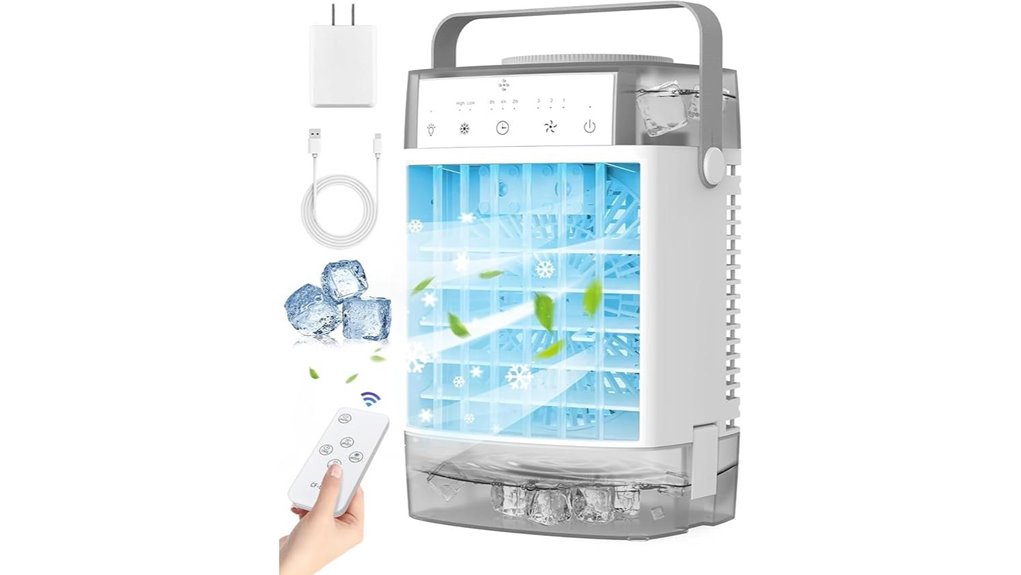
If you need a compact, USB-powered cooler that doubles as a humidifier, this dual-tank option is your best bet. This 3-in-1 device acts as an air cooler, humidifier, and fan, all in a compact frame (8.5 L x 7.13 W x 12.28 H) weighing 2.73 lbs. It uses evaporative cooling for a refreshing breeze and requires no installation, making it great for a tent, bedroom, or office. Power via USB-C, with a supplied 5V/2A adapter, supports power banks, laptops, car chargers, or home adapters. Dual tanks (top 1000 ml, bottom 600 ml) store cold water and ice for extended mist. Low water stops mist automatically.
Best For: (Best For your portable cooling needs in small spaces like tents, bedrooms, or offices, when USB power and simple setup are priorities.)
Pros:
- Compact, lightweight design with dual water tanks for extended humidification and mist.
- USB-C powered with multiple power options (power bank, laptop, car charger, home adapter) and includes a 5V/2A adapter.
- 3-in-1 functionality (air cooler, humidifier, fan) with adjustable wind speeds and two mist modes for customizable comfort.
Cons:
- Evaporative cooling effectiveness may vary with room humidity and may be less powerful in very hot, dry environments.
- Requires water and ice for maximum cooling; low water protection stops mist, which may reduce continuous cooling without maintenance.
- Noise at higher speeds (up to 55 dB) may be noticeable in very quiet environments like bedrooms.
Portable 4-in-1 Mini Evaporative AC Fan with Tank
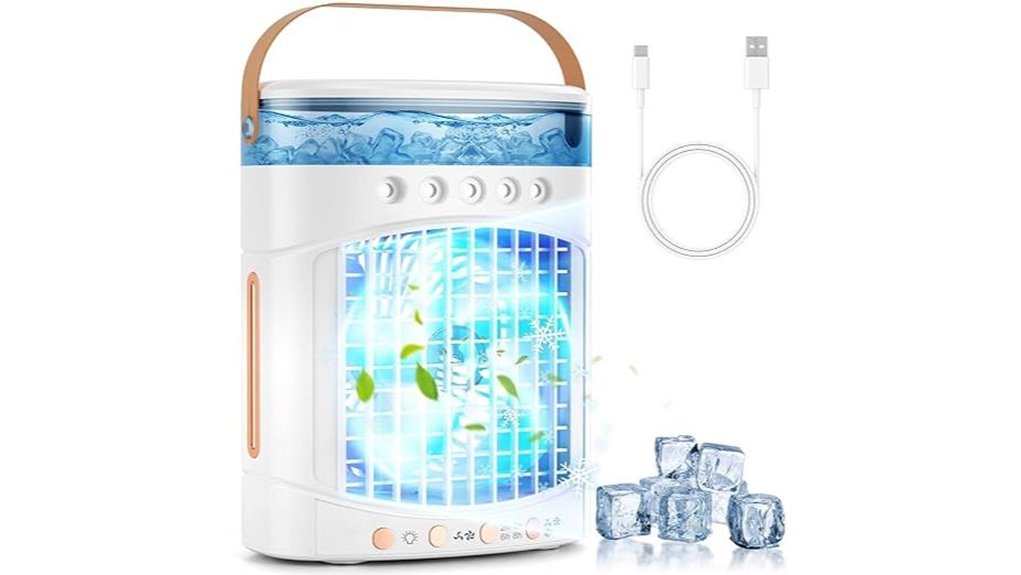
This Portable 4-in-1 Mini Evaporative AC Fan with Tank stands out for campers and tent dwellers who want a compact, USB-powered cooling and humidifying solution on the go. You get an air cooler, humidifier, fan, and nightlight in one sleek unit with a 700 mL tank and auto dry-off protection. Choose 2 fan speeds, 3 mist levels, and 7-color LEDs for ambiance, all at about 55 dB. It’s lightweight, with a leather handle, USB-powered from banks or laptops, and freestanding—no battery. For up to 6–8 hours, add ice and enjoy simple, plug-in operation.
Best For: Campers, tent dwellers, and mobile users who want a compact, USB-powered air cooler, humidifier, fan, and nightlight in one device.
Pros:
- 4-in-1 functionality (air cooling, humidifying, fan, nightlight) in a compact unit
- USB-powered and portable with a leather handle; suitable for power banks, laptops, and car chargers
- 700 mL reservoir with auto dry-off, ice can boost cooling, and low noise (≈55 dB)
Cons:
- No built-in battery; requires an external power source at all times
- Air flow specification and mist levels may be less robust than larger cooling fans
- Mixed customer feedback (average around 2.9/5 from many reviews) and occasional ease-of-use concerns
Arctic Air Chill Zone Evaporative Cooler with Hydro-Chill
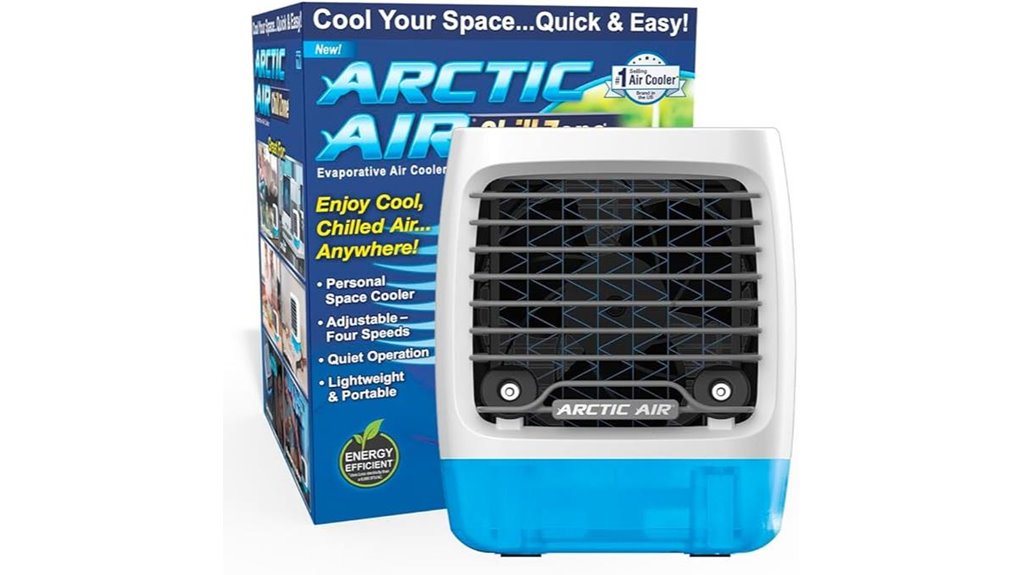
The Arctic Air Chill Zone Evaporative Cooler with Hydro-Chill stands out for tent users who want fast, targeted cooling with minimal setup. You’ll feel instant relief as Hydro-Chill Technology delivers dual cooling jets that turn hot air into cool, moist air through an evaporative cartridge. With 4 adjustable speeds and a multi-directional vent, you can customize room cooling to your preference and steer cold air toward you. It’s energy-efficient and whisper-quiet, ideal for bedrooms or small tents. Water tank lasts up to 8 hours, auto-off timer, 7 LED lights, and a lightweight, portable design for easy relocation. Replaceable cartridge simplifies maintenance.
Best For: Tent users seeking fast, targeted cooling with minimal setup and quiet operation.
Pros:
- Instant cooling effect from Hydro-Chill dual jets
- Energy-efficient, whisper-quiet performance
- Lightweight, portable design with easy maintenance (replaceable cartridge)
Cons:
- Water tank life up to 8 hours varies by speed and humidity
- Limited cooling for larger spaces or high-heat rooms
- Requires ongoing water refills for extended use
Portable Air Conditioner with 4 Speeds and 7 Colors
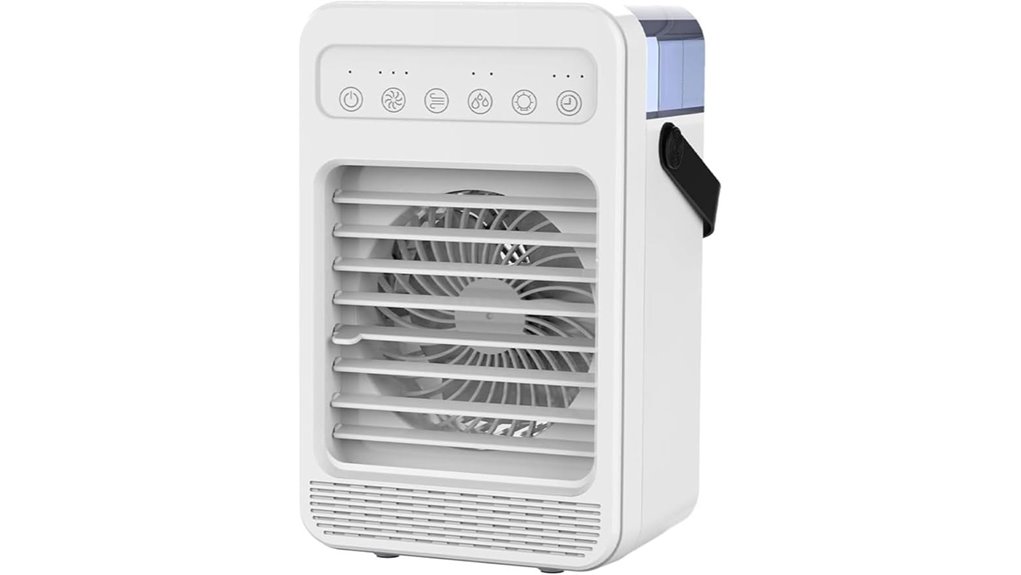
A standout pick for folks who want versatile cooling in tight spaces, this 4-speed portable air conditioner also comes in 7 colors, letting you match your setup while you stay comfortable. It’s a 4-in-1 unit: micro air conditioner, humidifier, bench fan, and LED environmental light. You’ll use water or ice to create cool, moist air, with a mist mode for even cooler output. Choose from 4 wind speeds and 2 mist modes, enjoy ultra-quiet operation, and set auto-timing for 2/4/6 hours. A 600 mL tank runs 6–8 hours, and the top tank is easy to refill. It remains plugged in to operate.
Best For: Those seeking a compact, multi-function cooling solution for small spaces that includes humidification, fan, and ambient lighting, with customizable mist and color options.
Pros:
- 4-in-1 functionality (air conditioner, humidifier, bench fan, LED light) in a single portable unit
- 4 wind speeds and 2 mist modes with ultra-quiet operation for personalized comfort
- Top-fill 600 mL tank with 6–8 hours of continuous use and transparent, spill-proof design
Cons:
- Must remain plugged in to operate (non-rechargeable)
- Regular emptying of the rear leak-prone tank required
- Ice/water combinations and mist mode needed for optimal cooling may require careful monitoring of water levels
MEPTY 3-in-1 Evaporative Cooler with Oscillation
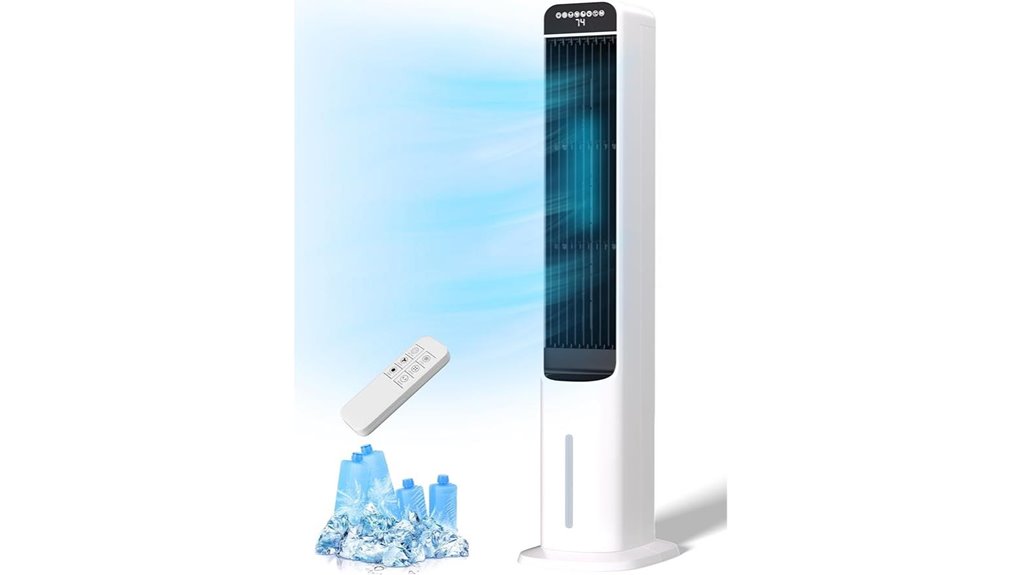
If you’re seeking an all-in-one solution that keeps a tent cool, humidified, and comfortable, the MEPTY 3-in-1 Evaporative Cooler with Oscillation fits the bill. This unit combines evaporative cooling, humidification, and a windowless air conditioner to create a stable indoor micro-climate. Choose Normal, Natural, or Sleep modes, and adjust Low, Medium, or High speeds for tailored comfort. Its tower design fits compact spaces, with a pull-out tank for easy refills and cleaning. Features like a 12-hour timer, auto screen-off, and a smart water-level switch boost usability. A copper motor, 80 W draw, and ETL safety certification ensure reliable, efficient operation.
Best For: Individuals seeking an all-in-one cooling, humidifying, and air-conditioning solution for compact spaces or tents.
Pros:
- 3-in-1 functionality (evaporative cooler, humidifier, windowless AC) for versatile climate control
- Low energy consumption (80 W) with copper motor for durable, efficient operation
- Easy maintenance features (pull-out water tank, auto shut-off pump, 12-hour timer, auto screen-off)
Cons:
- Evaporative cooling performance depends on ambient dry-air conditions and may be less effective in very high humidity
- Tower design may require more vertical space and could be less portable for very tight spots
- ETL certification indicates safety, but ongoing maintenance (water tank, filters) is still required for optimal performance
Factors to Consider When Choosing Portable Evaporative Cooler for Tent
When you pick a tent evaporative cooler, start with your tent’s ventilation needs and the noise it’ll introduce outdoors. Consider power options, water tank capacity, and how the device will perform cooling in open-air conditions. Aim for a model that balances low noise with sufficient cooling and convenient water and power setups.
Tent Ventilation Needs
Tent ventilation in a tent hinges on choosing an evaporative cooler that’s compact, low-heat, and able to move air quickly without occupying precious space. When you shop, pick a portable unit with low heat output and a small footprint so it fits in tight tent spaces. A higher airflow rate helps circulate air effectively in enclosed environments, especially if the outside air is hot and humid. Look for an integrated water tank and the option to add ice, which extends cooling time without frequent refills. Quiet operation matters for sleep, so target models with sounds around 50–60 dB. A design that supports directed or oscillating airflow distributes cooled air evenly, improving overall ventilation throughout the tent.
Power Source Options
Power sources for portable evaporative coolers in a tent boil down to portability, reliability, and run time. USB-powered units let you run from power banks, laptops, car chargers, or home adapters (5V/2A), which suits tent setups. Some models require a continuous power source because they’re non-rechargeable and must stay plugged in to operate. A 700 mL to 600 mL water tank supports several hours of cooling—typically 6–8 hours—before refilling is needed, so pick a model with handy refill points. Dual or multi-tank designs extend run time and allow separate water levels for misting and cooling. Look for auto shutoff or low-water protection to prevent dry operation. If you need true mobility, consider USB-powered options paired with portable batteries for quiet, cable-free use.
Water Tank Capacity
Water tank capacity largely dictates how long you can cool a tent between refills. A larger tank extends operation time between refills, letting you chill longer without frequent maintenance. Common capacities for portable evaporative coolers range from about 600 mL to 1000 mL (0.6–1.0 L) per tank, so pick a size that fits your tent size and trip duration. Dual-tank designs can offer extended run time by allowing refilling one tank while the other runs, reducing downtime. Tank capacity affects how often you must refill, especially in hot, dry environments typical of tents. Lightweight, compact tanks help with portability but may limit total running hours before interruption for refilling. Balance weight, space, and climate when deciding your ideal capacity.
Noise Level Consideration
When you’re choosing a portable evaporative cooler for a tent, noise level matters as much as cooling capacity. Most units aimed at tents run around 55 dB, about the sound of a quiet conversation from two feet away. That means you can sleep without constant turbine whine, especially at lower fan speeds. If you crank the speed, expect louder operation, so balance cooling needs with rest. Some models emphasize near-silent operation by using brushless motors and optimized airflow paths to cut that turbine-like noise. Look for explicit decibel figures or “whisper-quiet” claims to compare true noise performance across units. Remember, quieter doesn’t always mean weaker cooling; review both dB ratings and user notes on perceived sound to choose the best fit for your tent.
Cooling Performance Outdoors
Outdoor cooling performance hinges on conditions you’ll actually encounter in a tent setup. In dry, hot outdoor environments, evaporative coolers lower perceived temps by adding moisture, but their effectiveness drops as humidity rises. For tent use, pick models with refillable water tanks and the ability to add ice; this extends cooling duration and boosts chill factor when you need it most. Look for outdoor-friendly units designed with low operating noise, around 55 dB, to minimize sleep disruption. A compact, lightweight form with easy water reservoir access helps you refill and move the unit around camp without hassle. Ensure multiple wind speeds and mist modes are available so you can tailor airflow and humidity for different tent sizes and conditions.
Portability And Size
Portability and size matter just as much as cooling power when you’re setting up a tent. Look for a compact unit that fits a tent space without crowding, roughly 8–11 inches in length and width, and 4–12 inches in height. A lightweight design, about 1–3 kg, boosts ease of carrying around a campsite. A built-in carrying handle or strap further improves transportability between car, campsite, and tent entry. Aim for a tank capacity of 600–1000 mL to sustain several hours of operation, reducing frequent refills during medium-length trips. If possible, choose a USB-powered option or battery-powered capability to stay flexible when a mains outlet isn’t accessible inside a tent. Prioritize models that balance compact dimensions, light weight, and practical refilling intervals.
Ease Of Refilling
Refilling should be quick and simple, even in a cramped tent. A larger top water tank (34 oz / 1000 ml) plus a removable bottom tank (20 oz / 600 ml) means fewer stops for refills, so you stay cooling longer. Look for a top-fill design with a wide opening and a transparent level indicator; you’ll know at a glance when it’s time to refill. An accessible pull-out tank helps you reach the reservoir without scrambling in tight spaces. Choose clear, spill-proof reservoirs with a leak-proof seal to minimize accidents when transporting or moving the unit. If you want nonstop operation, a dual-tank setup lets you swap or top up water without interrupting airflow.
Durability And Safety
Durability and safety should be your top priorities after choosing the right size and refilling ease. Look for ETL or equivalent safety certifications to ensure electrical and thermal safety in tent environments. Choose models with auto-shutoff or low-water protection so overheating or spills don’t happen when you’re not watching. Prioritize units with stable, leak-proof water tanks and clear water-level indicators to avoid outages in tents. Favor devices with low noise—around 55 dB or lower—to keep the sleeping area peaceful. Ensure the unit is energy-efficient, about 80 W, so you can maximize runtime on portable power sources. By prioritizing these features, you’ll reduce risk and extend performance in compact, outdoor spaces.
Common Questions
How Long Do Tent Evaporative Coolers Run on Battery Power?
A typical tent evaporative cooler runs for 3 to 8 hours on battery power, depending on fan speed, battery capacity, and ambient humidity. If you set the unit to low, you’ll squeeze closer to the upper end; high speed drains power faster. Use a high-capacity portable battery or add solar charging if you need longer runs. To maximize runtime, close vents to limit intake, and pre-cool the space before unplugging. Consider occasional recharges.
Can These Units Operate Effectively in High Humidity?
Sure thing: Yes, high humidity hinders evaporation, so these units struggle more in humid air. You’ll see less cooling effect and shorter draft-forces, especially if humidity stays high indoors. To optimize, run fans with a dehumidifier, choose models with higher airflow, and seal your tent to reduce moisture buildup. In modest humidity, you’ll feel a cooler, crisper breeze. Stay aware of humidity levels, and adjust usage for best comfort.
Do They Require a Continuous Water Supply or Jug Refills?
They typically require a water source, either a continuous line hookup or regular jug refills. If you don’t have plumbing, you’ll rely on manual refills every few hours, depending on fan speed and humidity. Some models include a larger reservoir for extended use, which minimizes trips to refill. Expect more frequent changes in higher temperatures or lower humidity. Always check your unit’s reservoir size and refill schedule before extended camping trips.
Are Replacement Pads Readily Available for All Models?
Replacement pads aren’t available for every model, but many popular brands offer compatible replacements and sometimes universal pads. Check the exact model number and retailer listings to confirm compatibility. If you can’t find pads, some users repurpose other evaporative pads with adapters or contact the manufacturer for guidance. Keep an eye on warranty terms, since unsuitable pads could affect performance or airflow. Always verify exact pad dimensions before purchasing.
Do Portable Coolers Double as Air Purifiers or Dehumidifiers?
Around 60% of portable evaporative coolers include a basic air-purifying filter, but they don’t double as reliable dehumidifiers. You’ll notice LEDs and cycling fans, yet moisture control is limited unless you pair with a dedicated dehumidifier. If you need true purification or humidity management, pick a model with separate HEPA filters or built-in dehumidification modes, and don’t rely on an evaporative unit alone for those tasks.