
You’ve probably seen similar gadgets, but in 2026 you’ll want a compact cooler that truly fits an RV life. You’ll weigh options like 3400 BTU units for 65–86 sq ft, quiet rooftop models, and portable evapo-coolers that run on 12V or include remotes. Ready to compare features, noise, and power needs before you commit? There’s more to uncover about how each option shapes comfort on the road.
Key Points
- Compare refrigerant-based portable AC units (around 3400–5400 BTU) vs evaporative coolers for RVs, focusing on power needs, noise, and humidity tolerance.
- Consider 12V rooftop RV A/C options for consistent cooling, weighing higher power draw and installation requirements.
- Include BLACK+DECKER and Arctic Air Pure Chill among compact evaporative choices for low power draw and USB/portable power options.
- Prioritize portability: weight (28–33 lb), built-in handles, compact dimensions, and no-permanent install needs.
- Evaluate run-time and power budgets: 110V, ≥1000W battery/solar compatibility, inverter use, and minimal water refills.
Portable AC, 3400 BTU, 65-86 sq ft, Remote Control
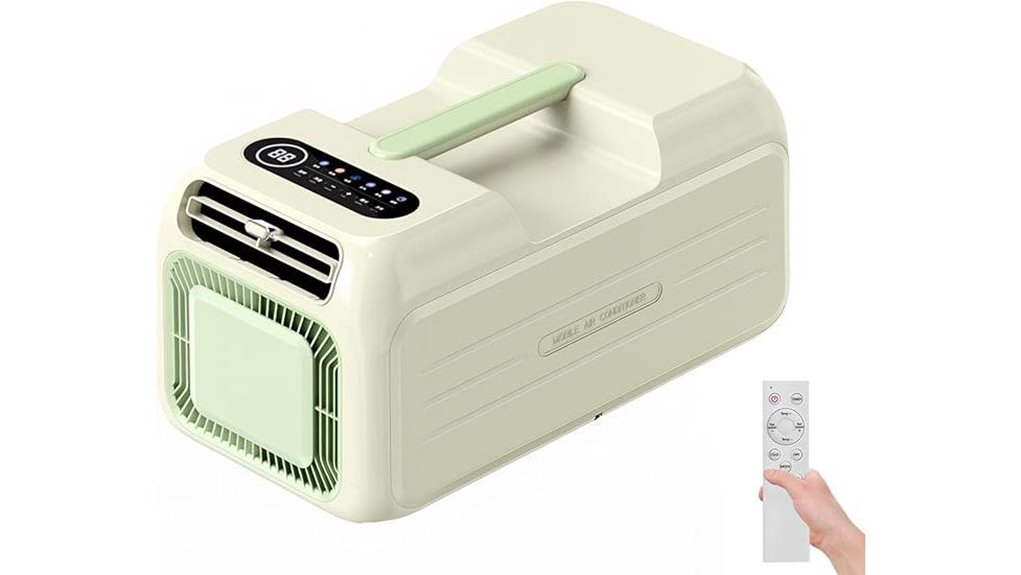
If you’re RVing or camping in a compact space, this Portable AC stands out for delivering 65–86 sq ft cooling with a fast start—taking cold air within 3 minutes—without needing external water or ice. You get a 3400 BTU/1000W unit with a built-in Panasonic compressor that quietly chills down 18°F in 15 minutes via Turbo Mode. It’s drainless, recycling moisture, and includes a drainage pipe for movement or dehumidifier use. You can control it with a remote or panel, and power it from 110V, a power station, or an EV discharger. Perfect for tents, RVs, and small rooms.
Best For: RVers, campers, and small-space dwellers seeking portable cooling for tents, vans, or compact rooms without permanent installation.
Pros:
- Portable, compact design with 65–86 sq ft cooling capability
- Drainless, moisture recycling with included drainage pipe; quiet operation (as low as 45dB)
- Flexible power options (110V, power station ≥1000W, or EV discharge) and remote control
Cons:
- Requires ventilation to expel hot air (not a standalone indoor unit)
- 33 lb weight may be cumbersome for truly mobile setups
- 3400 BTU (1000W) cooling capacity limits use to small spaces; not suitable for larger rooms
12V Rooftop RV A/C 10000 BTU, Ultra-Quiet
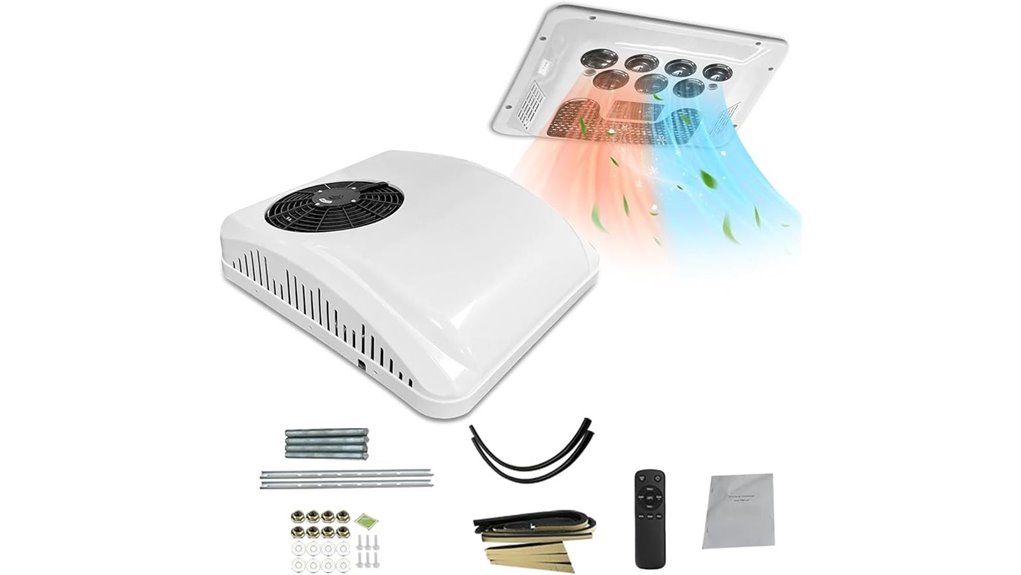
The V Rooftop RV A/C 10000 BTU, Ultra-Quiet is built for RV owners who need dependable cooling without draining their power budget, thanks to its 12V operation and efficient 960 W draw. This 12V rooftop unit delivers 10000 BTU of cooling, plus a heating function, and is designed for energy efficiency and stable operation with multiple devices. It installs easily at the skylight and fits a standard roof size. Indoor and outdoor dimensions are compact for space-limited installs. It’s weatherproof, UV- and impact-resistant, and versatile for RVs, campers, or other off-grid applications.
Best For: RV owners and campers seeking reliable 12V cooling with low power draw for off-grid or generator-powered setups.
Pros:
- 12V operation with a relatively low 960 W draw, suitable for on-board generators or limited power supplies
- 10000 BTU cooling with a heating function for year-round comfort
- Weatherproof, UV- and impact-resistant ABS construction designed for harsh conditions
Cons:
- Rated current of 30–50 A may require careful electrical planning on some setups
- Installed footprint and dimensions may require suitable roof space and mounting considerations
- 2300 W cooling air volume and 1000 W heat air volume could exceed power budgets on smaller solar setups or during peakLOAD periods
Portable AC 3300BTU Compact Air Cooler for Camping Tent
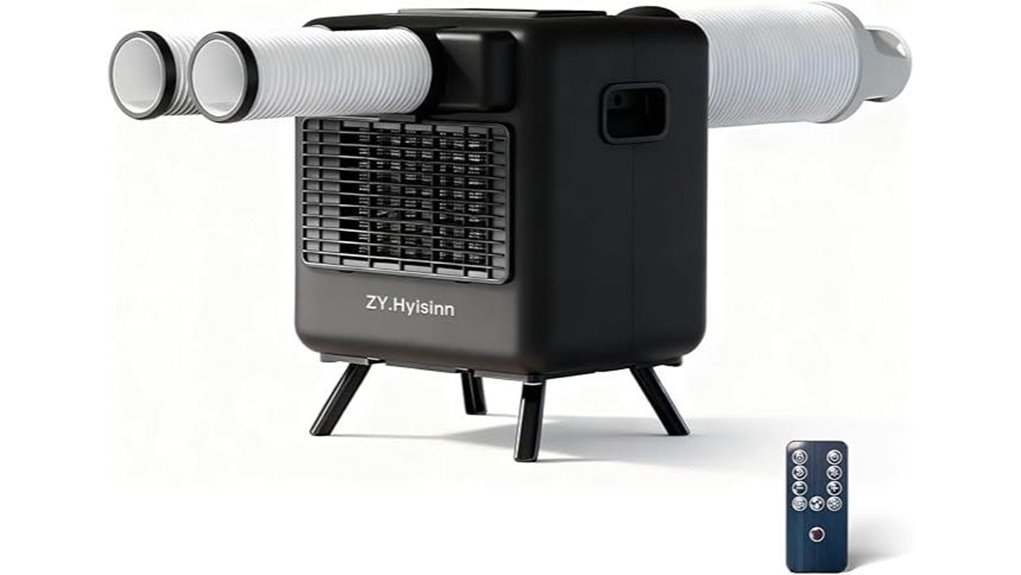
This compact 3300 BTU A/C is ideal for campers who need portable cooling without heavy setup. You get a 14.01 x 11.73 x 14.48-inch unit weighing 28 lbs, designed for tents, van life, camping, outdoor use, or an office. It runs on 110 V, 436 W, with 3300 BTU cooling and 49 dB noise, and includes a remote (battery not included). Choose Cool, Dehumidify, or Fan, plus 0–24 hour timer and sleeping mode for quiet nights. No heavy installation required, built-in handles aid portability, and it ships with exhaust duct, window spacer, drain, and water bag. Warranty is 1 year.
Best For: Campers and outdoor enthusiasts needing portable, easy-to-setup cooling in small spaces like tents, vans, or RVs.
Pros:
- Compact, portable design with built-in handles; weighs 28 lbs.
- Quiet operation (49 dB) with multiple modes (Cool, Dehumidify, Fan) and 0–24 hour timer.
- No heavy installation required; ships with exhaust duct, window spacer, drain, and water bag.
Cons:
- Only 3300 BTU, best for smaller spaces; cooling effectiveness depends on space and temperature.
- 110 V operation requires standard outlet; may not be practical off-grid.
- Heavier for some users (28 lbs) and may require lifting for setup in tight tents.
Arctic Air Pure Chill 2.0 Evaporative Cooler Blue
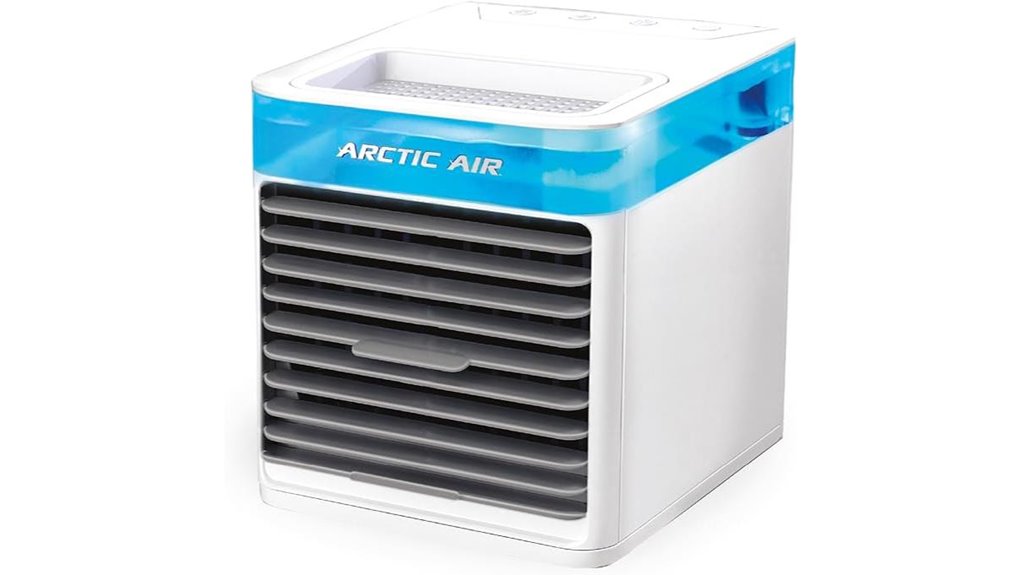
Compact and portable, the Arctic Air Pure Chill 2.0 Evaporative Cooler Blue is a strong pick for RV travelers who want breathable, energy-efficient cooling on the go. You power it from 120 volts and enjoy 8-10 watts of use, so it won’t spike your battery or generator load. Runs up to 10 hours on a given setting, with multi-directional vents for adjustable airflow. Top-fill water tank, touch controls, and four speed options simplify operation. It humidifies as it cools, keeps a bedroom or cab area comfortable, and even offers a built-in LED nightlight with color choices. Ideal for indoor or outdoor use.
Best For: RV travelers and compact-space users seeking portable, low-energy cooling with humidity in both indoor and outdoor settings.
Pros:
- Compact, lightweight, and highly portable for travel or small spaces.
- Low energy consumption (8-10 watts) suitable for battery or generator-conscious setups.
- Dual cooling jets with multi-directional vents and built-in LED nightlight add versatility.
Cons:
- Water-based cooling requires periodic refilling (up to 10 hours runtime depending on settings).
- Evaporative cooling effectiveness may vary with high humidity environments.
- Limited cooling range compared to traditional air conditioners or larger fans.
2-in-1 Mini Wall Mounted AC Fan Heater Unit
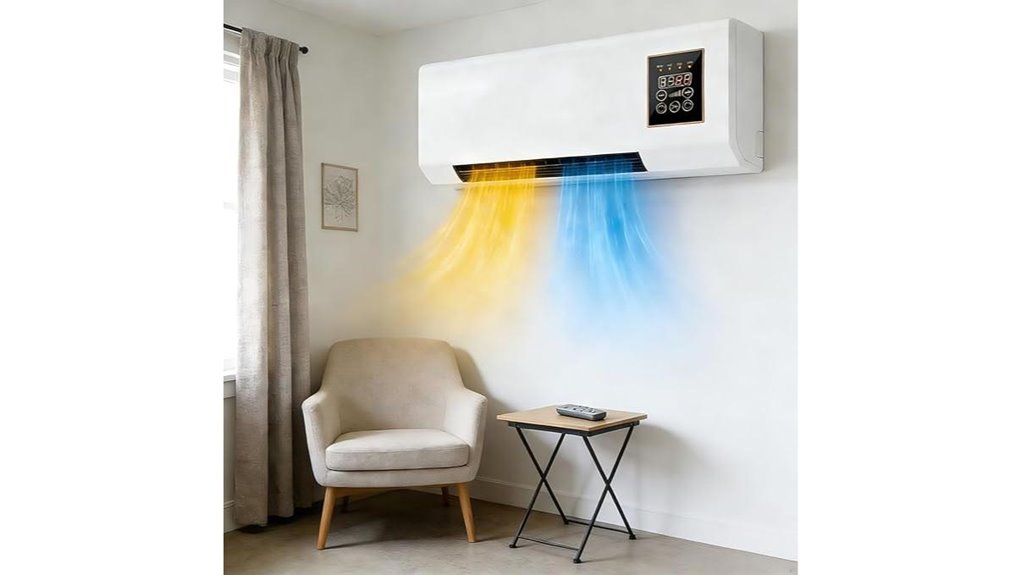
With its 2-in-1 design, the Mini Wall Mounted AC Fan Heater Unit stands out for RV owners who want both cooling and heating in a single, space-saving package. This all-in-one unit combines wall-mounted heating, cooling, dehumidifying, and gentle breeze circulation, serving as a powerful space heater in cold winters and a natural airflow system in warmer months. You get fresh ventilation plus smart control and a quiet, remote-operated fan. It’s safe for any space, with flexible installation as a fixed wall unit or portable AC. Energy-saving, ductless, and value-driven, it replaces several appliances in one compact package.
Best For: RV owners and small-space dwellers seeking an all-in-one, wall-mounted cooling and heating solution with energy efficiency and flexible installation.
Pros:
- All-in-one unit: heating, cooling, dehumidifying, and fresh air circulation in one compact package.
- Space-saving wall-mounted design with optional portable use and smart remote control.
- Energy-saving, ductless operation that reduces the need for multiple appliances.
Cons:
- May have limited cooling/heating capacity for larger rooms or extreme climates.
- Requires proper installation for fixed wall mounting; portable use may affect efficiency.
- Some users might prefer separate dedicated units for rooms with varying temperature zones.
3-in-1 Portable Evaporative Cooler with Battery
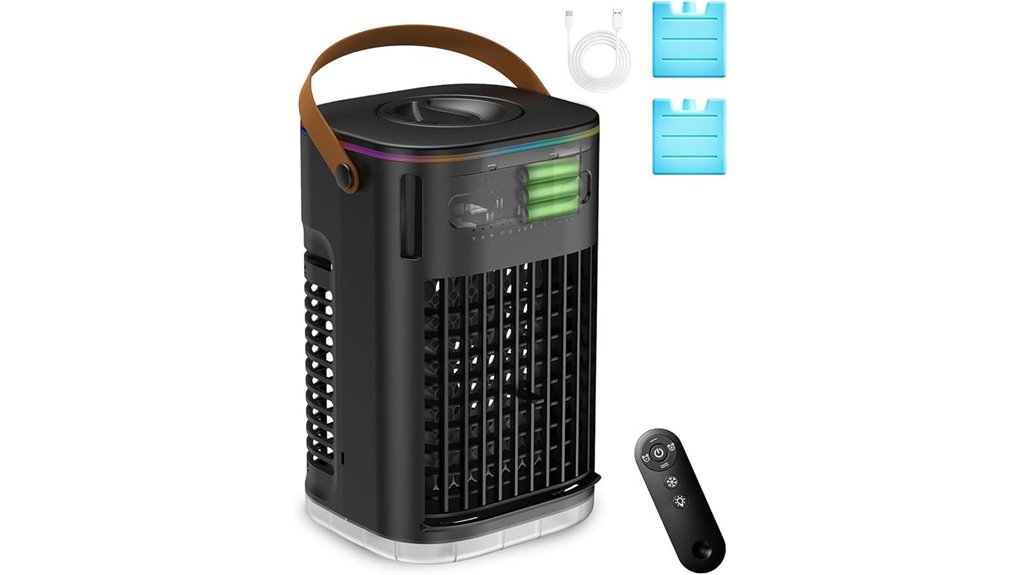
For campers who crave true wireless cooling, the 3-in-1 Portable Evaporative Cooler with Battery stands out thanks to its 5400mAh battery that fuels up to 15 hours of continuous use, freeing you from constant power access. You get 9-15 hours of operation, with a 5ft Type-C cable for USB-powered connections to a computer, car charger, or power bank. It packs a 1200mL water tank with ice boxes and two ice packs, delivering 40% longer chill than desk fans. Choose 2-speed misting, set a 0-7 hour timer, or enjoy LED ambiance while it quietly cools up to 8°F.
Best For: campers and outdoor enthusiasts who need true wireless cooling with flexible power options.
Pros:
- Long battery life: up to 9-15 hours of operation on a single charge
- Portable, compact design with USB-C connectivity for power banks, cars, or laptops
- 1200mL water tank with ice packs for stronger cooling and humidity control
Cons:
- Heavier reliance on battery could be limiting if charging opportunities are scarce
- Ice packs and water require regular refilling and maintenance
- Noise level may vary with higher speed settings despite being quieter than standard fans
BLACK+DECKER Desktop Air Cooler, 3-Speeds, 0.5L Tank
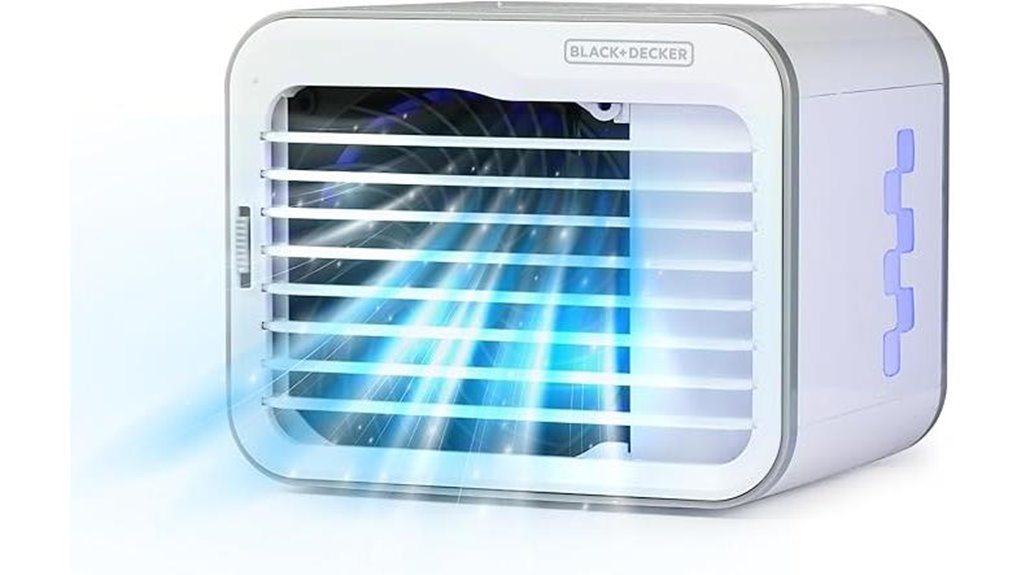
If you need a personal cooling solution that’s truly desk-ready, the BLACK+DECKER Desktop Air Cooler stands out with its compact, USB-powered design and a low-profile 0.5L water tank that’s perfect for RV countertops or small bunks. This evaporative cooler delivers three fan speeds—low, medium, high—so you can dial in comfortable airflow. It runs on micro-USB, with a 39″ cable included, and you’ll get up to eight hours per refill. A water level indicator helps prevent surprises, while the LED nightlight offers six steady colors and a rotating option. Simple push-button controls keep setup effortless, and the White/Gray design blends with most interiors.
Best For: Those seeking a compact, USB-powered personal cooler ideal for desks, small offices, RVs, or dorm-style spaces.
Pros:
- USB-powered with a long 39″ cable for flexible placement
- Low-profile 0.5L tank reduces spill risk and fits small spaces
- Three fan speeds with a clear water level indicator and optional LED nightlight
Cons:
- Small water tank requires more frequent refills in hot conditions
- Evaporative cooling is less effective in high-humidity environments
- Limited to personal cooling; not suitable for larger rooms or multiple users
Factors to Consider When Choosing: Compact Air Cooler for RV
When picking a compact RV cooler, you’ll weigh power options, how much cooling you actually need, and how portable the unit is for your setup. Consider noise, sleep-mode features, and how easy it is to install without clutter, plus how the unit will run on your preferred power source. Balance installation ease with ongoing use, so you choose a model that fits your space, weight limits, and daily routine.
Power Requirements and Sources
Understanding power needs is key to choosing a compact RV cooler that fits your setup. Many portable RV air coolers run on 110V AC or a capable high-output source, like a station ≥1000W or an EV/discharger setup for camping. Some models are 12V rooftop designs that pull current from your RV’s onboard system or a generator, with draws around 30–50 A depending on the unit. Energy use is typically shown as SEER or wattage, often in the 400–960 W range, which helps you estimate run time with your power source. Solar-ready or battery-powered options can extend operation via battery packs or solar charging, altering usable runtime. Inverter compatibility and proper ventilation/exhaust influence power needs and installation choices in RV environments.
Cooling Capacity Alignment
Choosing the right cooling capacity for your RV comes down to matching BTU to space and how you’ll use the unit. Start by matching BTU to your RV space: smaller tents or tight interiors suit 3300–3400 BTU units, while larger living areas benefit from 10000 BTU rooftop models. Next, consider cooling area in square feet: design specs often list effective ranges like 65–86 sq ft for compact portable units, guiding suitability for rooms or compartments. Evaluate air delivery and airflow design: some units claim longer reach or ducts to spread cool air up to 10 ft. Also weigh dehumidification versus evaporative cooling—drainless, moisture-recycling designs affect humidity management in RVs. Finally, balance power needs with your sources, noting 110V/60Hz or higher-current setups for rooftops or 12V systems.
Portability and Weight
Portability and weight often determine how smoothly you can move and install a compact RV air cooler on the go. You’ll notice weights range from about 28 lb to 33 lb, which directly affect how easily you lift, carry, and position the unit between campsites or during travel. Compact dimensions—roughly 14 x 11 x 14 inches—help it fit into tight RV spaces and bunks, but still set essential clearance for venting and storage. Some models are truly portable with no outdoor exhaust, while others require rooftop or window venting, influencing how relocate-friendly they are inside an RV. Built-in handles, integrated drainage, and lightweight construction boost transportability, and battery or external power options (12V, USB, or portable stations) expand where you can use them.
Noise and Sleep Mode
Wondering how loud a compact RV air cooler will be at night? Noise levels vary by model, with quiet modes from about 24–45 dB and standard operation around 49 dB, so your sleep quality can be affected if you pick the wrong setting. Sleep mode helps by reducing fan speed and compressor activity, which minimizes disruption during the wee hours. For close-quarters RV living, opt for quieter evaporative or low-power designs to avoid waking fellow travelers. Some units advertise specific dB ranges to help you compare overnight suitability. Look for features like night timers and sleep presets that automatically limit noise through scheduled cycling. Remember, lower dB in sleep mode usually means steadier, more restful nights.
Installation and Setup
Installing and setting up a compact RV air cooler isn’t one-size-fits-all; your choice hinges on where and how you’ll power and vent it. Portable units don’t have an outdoor condenser, so you must provide ventilation to expel hot air, while roof- or wall-mounted options need proper ducting or mounting considerations. Power options differ too: many RV coolers run on 110V plug-in or 12V with on-board generators, which affects placement and accessibility. Some models boast tool-free installation, like portable units with built-in handles, versus fixed wall or skylight installations. Size and weight matter for storage and maneuverability, with portable models around 21–22 inches deep and about 33 pounds. Installation accessories vary, including exhaust ducts, window spacers, drainage pipes, or remotes to fit tight spaces.
Energy Efficiency and Run Time
Energy efficiency matters more than ever when choosing a compact RV air cooler, because lower power draw extends run time on limited RV power. Look for models with low power draw and high efficiency ratings (SEER or wattage per BTU) to maximize runtime on your power supply. Battery-powered or rechargeable units (for example, a 5400mAh battery with 9–15 hours of use) offer extended run time without constant mains power. Evaporative coolers typically use less energy than compressor-based units, making them better for dry RV environments. Units with multi-speed or adjustable humidity features can cut power usage by matching cooling output to your current comfort needs. For fixed hookups, prioritize low wattage, energy-efficient compressors (roughly 400W–960W) to balance cooling performance and shore power consumption.
Common Questions
How Energy-Efficient Are These Compact RV Coolers?
Energy efficiency varies, but you’ll see solid results from compact RV coolers. Look for models with high EER or CEER ratings, energy-saving modes, and insulation that minimizes runtime. You’ll typically use less energy than standard home units, especially when you run on shore power or high-efficiency generators. Expect to save with adjustable fan speeds, smart thermostats, and proper ventilation. Choose Energy Star or similar-certified options for best overall efficiency.
Can They Operate on a Standard RV Battery System?
Yes, they can operate on a standard RV battery system, though you’ll want models with low power draw and a suitable inverter. Think of your battery as a river; the cooler is the little boat that rides it. If you keep the throttle steady and the flow modest, it’ll reach the shore without draining the source. Use energy-saving settings, monitor amp-hours, and avoid running the compressor nonstop for long stretches.
Do Any Models Double as Heaters or Dehumidifiers?
Some models can double as heaters or dehumidifiers, but most are dedicated cooling units. If you need dual functionality, look for heat pump or dehumidifier-integrated designs, and check efficiency ratings and noise levels. Heaters may run on shore power or inverter-backed systems, but not all coolers support both modes. Always verify voltage, BTU output, and safety features before pairing with your RV’s electrical setup. Consider a separate dehumidifier for humidity control if needed.
What Noise Levels Can Be Expected in a Small RV?
You’ll typically notice 40–60 dB of noise in a small RV, with most units around a quiet hum or soft whir. At higher speeds or on turbo modes, expect up to 65–70 dB. If you’re sensitive to sound, look for models marketed as “quiet,” “low noise,” or with insulated housings. Using a fanless or inverter-driven unit can further reduce noise. Consider placing it away from sleepers to lower perceived levels.
Are Filters or Pads Single-Use or Reusable?
Filters and pads are reusable in many compact RV coolers, though some models use disposable pads. Check your user manual to confirm, and look for washable or replaceable components. If you opt for reusable options, rinse or soak as directed after use, then air dry fully before reinstalling. Replacing pads when they wear thin helps maintain efficiency. Keep spare pads handy, and you’ll minimize downtime and maintain cooler performance on the road.