
If you’re hunting for a portable heat-relief option that isn’t a bulky AC, the 7 best portable AC alternatives for 2026 might fit the bill. You’ll find everything from DC-motor tower fans to compact handhelds with USB-C, plus 3-in-1 units that cool, humidify, and circulate air. Each choice aims for quiet operation, easy cleaning, and light weight. Curious which model balances power and portability best for your space and budget? Let’s compare options that keep you cool on the go.
Key Points
- Portable fans with integrated cooling features (evaporative or ice-pack assisted) as budget-friendly alternatives to expensive portable ACs.
- Compact, lightweight designs with 80–120° oscillation and high airflow (CFM/m/s) for broad room coverage.
- Quiet operation options (as low as 20–35 dB) suitable for bedrooms or workspaces.
- Multi-mode versatility (Normal, Natural, Sleep, Cool) and remote or touch controls for convenient use.
- Easy maintenance (removable grilles, washable filters, removable water tanks) and USB-C or battery-powered options for mobility.
DREO Tower Fan with DC Motor, Quiet, Remote
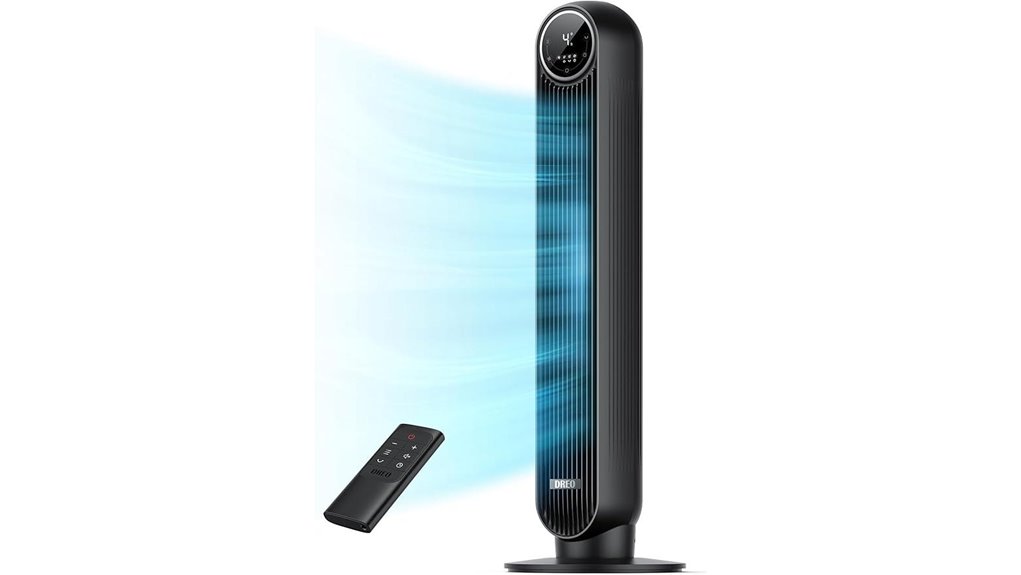
If you’re after near-silent operation without sacrificing airflow, the DREO Tower Fan with DC Motor, Quiet, Remote stands out with its upgraded brushless DC motor and TurboWind tech delivering strong performance at just 20 dB in quiet mode. You get faster spin and stronger airflow, with speeds up to 28 ft/s and projection up to 34 ft. Enjoy 8 speeds and 4 modes—Normal, Natural, Sleep, Auto—with remote control or touch screen for easy adjustments. The 90° oscillation covers more, while noise-reducing algorithmic impeller design plus Coanda reduce chatter. Easy cleaning, ETL certification, and safe, versatile use complete the package.
Best For: Those seeking near-silent, strong airflow for bedrooms or indoor spaces with versatile control and easy maintenance.
Pros:
- Ultra-quiet operation at 20 dB in Sleep/quiet mode with noise-reducing design
- Powerful airflow up to 28 ft/s and 90° oscillation for broad coverage
- Easy cleaning with removable rear grille and convenient remote/touch controls
Cons:
- Higher-end features may come with a premium price
- 90° oscillation is fixed (no multi-directional tilt)
- Battery-free remote control requires batteries and may be misplaced
Upgraded 3-in-1 Portable Handheld Fan with Ice Cooling
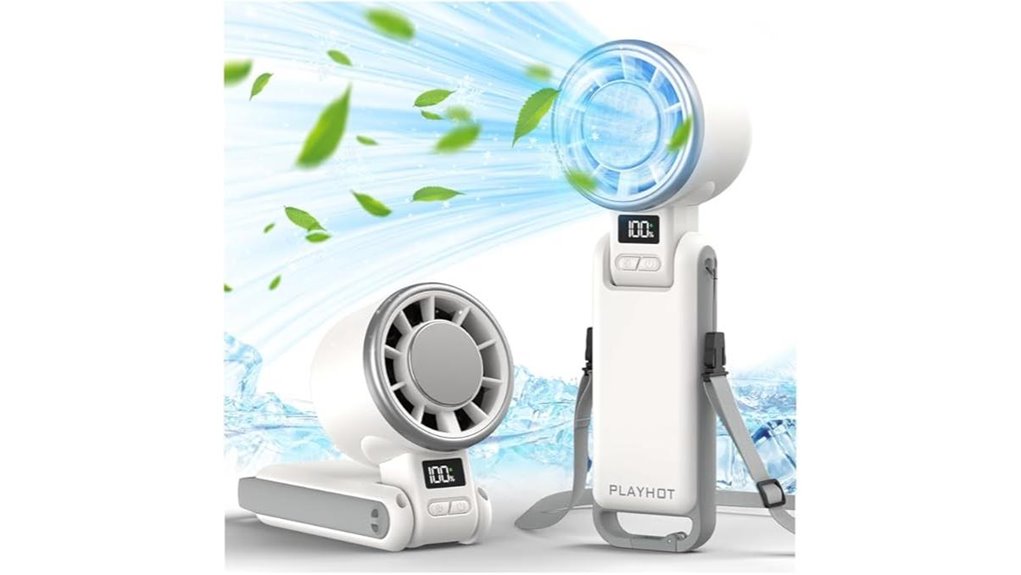
This upgraded 3-in-1 Portable Handheld Fan with Ice Cooling stands out for anyone who needs instant, all-day cooling in a compact package: a one-touch 60°F cooling mode combined with 5 turbo wind speeds and up to 12 hours of battery life. You get rapid surface cooling to 60°F, with a 25550 RPM three-phase brushless motor delivering wind up to 10 m/s for hot environments. Choose from 5 speeds for personalized comfort, and enjoy 3-in-1 versatility: handheld, desktop, or neck-hanging. It recharges in 3 hours via Type-C, and includes a lanyard for portable, secure use.
Best For: Busy hot-day commuters and outdoor enthusiasts seeking instant, all-day cooling in a compact, versatile 3-in-1 device.
Pros:
- 1-touch 60°F cooling with 5 adjustable wind speeds for personalized comfort
- Up to 12 hours of battery life and fast 3-hour Type-C recharge
- 3-in-1 design: handheld, desktop, or neck-hanging with lanyard included
Cons:
- High-speed motor may be noisy in turbo mode
- 60°F cooling may require direct contact/face exposure for best effect
- Maximum wind speed and cooling duration depend on chosen setting and usage conditions
DREO Portable Air Conditioner with Oscillating Cooler
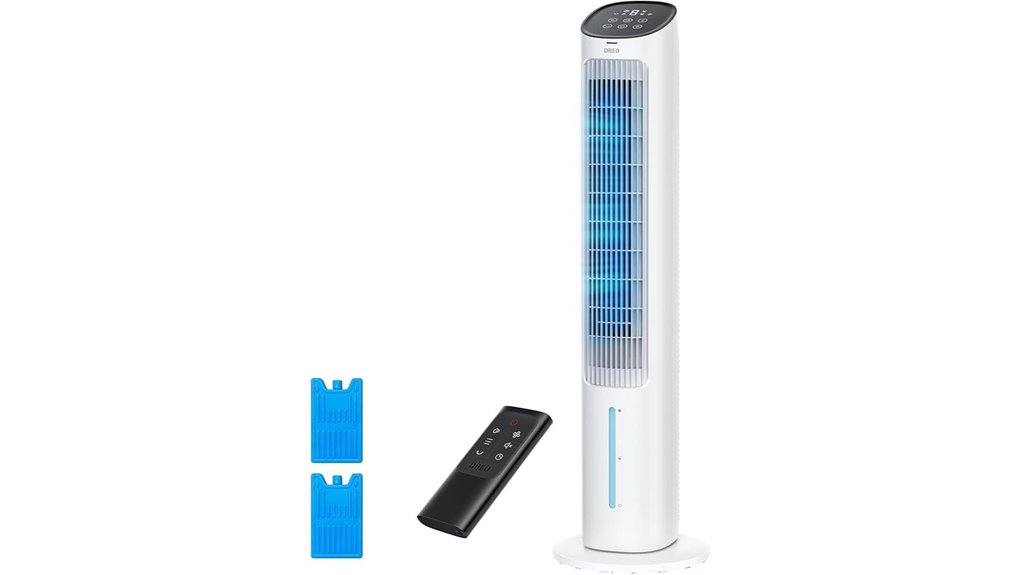
The DREO Portable Air Conditioner with Oscillating Cooler stands out for its ultra-quiet operation and powerful 80° oscillation, making it a strong pick if you need cool air without loud fan noise. You’ll enjoy a quiet cooling fan with a 35dB working noise, so you can sleep or work without interference. It uses dry, hot air that passes through cooling pads, delivering cool air with comfortable humidity. With 1,500 rpm and 80° oscillation, it pushes air up to 22 ft/s and reaches far corners. Maintenance is simple thanks to a removable tank, pads, and rear grille. Includes remote, 4 speeds, timer, and ice packs.
Best For: Those who want ultra-quiet, portable cooling with broad 80° oscillation and easy maintenance for bedrooms or workspaces.
Pros:
- Ultra-quiet operation (35 dB) for sleep or work without interference
- 80° oscillation with strong air movement up to 22 ft/s for wide-room coverage
- Easy maintenance with removable water tank, cooling pads, and rear grille
Cons:
- May rely on water/ice packs for cooling, which can require frequent refilling
- May be best suited for smaller to mid-sized rooms depending on climate
- Portable unit may have limited cooling efficacy compared to outdoor or window units
JISULIFE Pro Handheld Fan: 1–100 Speed, 5000mAh
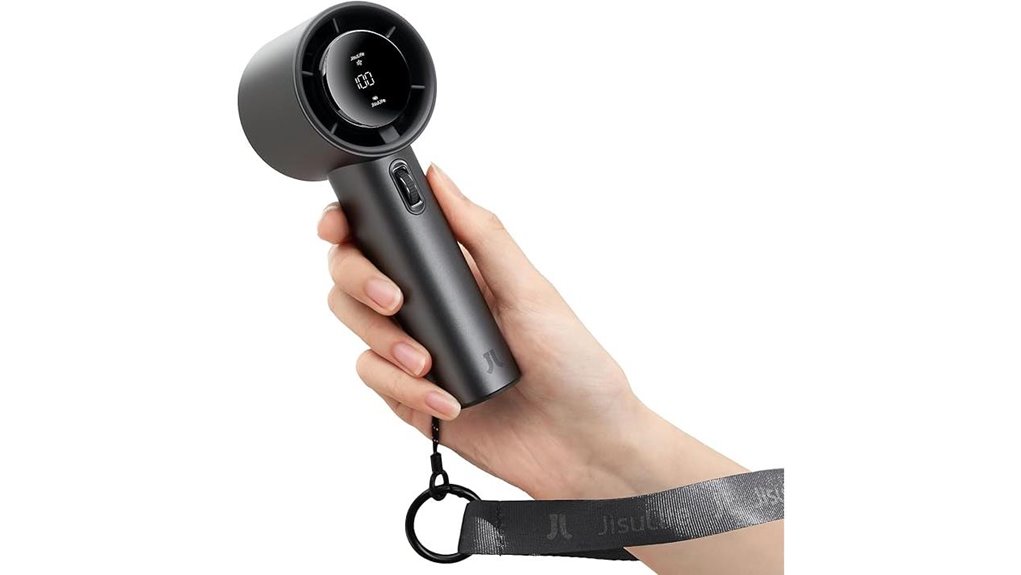
The JISULIFE Pro Handheld Fan stands out for its extreme cooling output in a compact package, making it the ideal choice for anyone who needs adjustable, high-speed airflow on the go. You get a metal-bodied, 6.14 x 2.38 x 2.28 inch fan weighing 9.12 oz with a brushless three-phase motor that delivers up to 9 m/s and up to 15000 RPM. It offers stepless 1–100 speed control, a digital display, and USB‑C fast charging to 18W for a full 1.5–2 hour charge and up to 15 hours of runtime. Includes organizer, lanyard, and USB‑C cable. Warranty: 1 year.
Best For: outdoor enthusiasts and professionals who need high-powered, adjustable airflow on the go, packed in a compact, durable handheld design.
Pros:
- Extremely high maximum wind speed (up to 9 m/s) and 15000 RPM for strong cooling
- Stepless 1–100 speed control with a digital display and USB-C fast charging (18W)
- Long runtime up to 15 hours on a single charge and solid 5000mAh battery in a durable metal body
Cons:
- Noise increases with speed (up to ~80 dB at top setting)
- Higher price point due to premium features and build
- Short peak charging time (1.5–2 hours) may still require planning for extended use
Kimguard Portable Turbo Fan with Ice Cooler
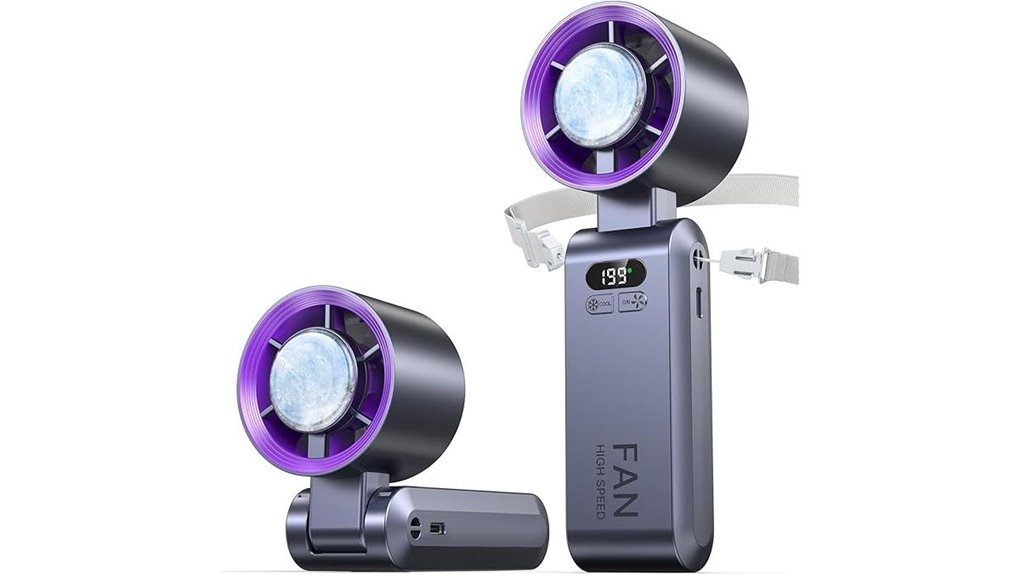
Pros:
- Turbo speed up to 20000 RPM with 8.5 m/s wind and 199 adjustable levels for precise cooling
- 3-in-1 design (handheld, desk/ tabletop, neck-lanyard) with a dual-function ice cooler pad
- Long runtime (5–20 hours) with a quick 2-hour USB-C recharge and USB power bank compatibility
Cons:
- 5-watt power but high-speed operation may still drain the battery quickly at max settings
- Noise around ~45 dB could be noticeable in quiet environments
- Heavier handheld use and ice cooler pad may limit ultra-compact portability in some cases
Portable Air Conditioner with 3 Speeds and Timer
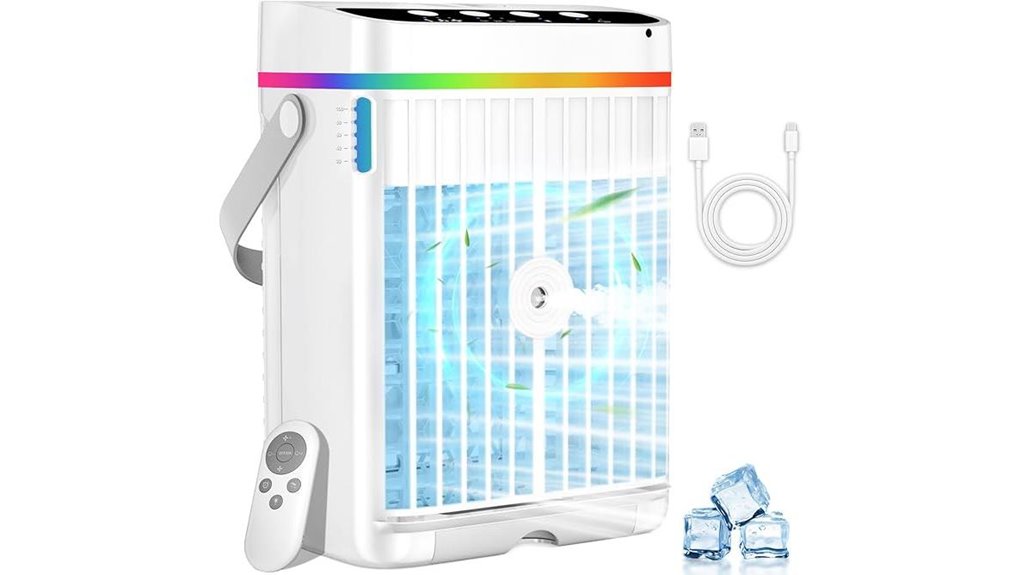
This compact 4-in-1 unit shines for bedside or desk setups, offering 3 speeds and a programmable timer alongside a unique nano-ice mist system that cools without-heavy condensation. You get a 4-core high-speed motor with an air channel designed for efficient cooling, plus a humidifier, night light, and portable fan mode. Expect a 45-50°F drop when using ice and water, with 3 mist levels and 3 fan speeds, and a 90° outlet for tailored airflow. A 1250 ml tank enables long misting, up to 9 hours on low, and USB-C power for flexible setup.
Best For: bedside or desk users seeking a compact, versatile 4-in-1 cooling solution with USB-C power and gentle misting.
Pros:
- 4-in-1 functionality (fan, humidifier, portable AC, night light) in a compact unit
- Nano-ice mist system with 45-50°F cooling when used with ice and water
- USB-C powered and highly portable, with up to 9 hours of misting on low
Cons:
- Effective cooling radius is limited to 3-4 ft, may not cool larger spaces
- Requires ongoing water management; may need frequent refills for extended use
- Lower power (10W) compared to traditional air coolers, which may affect maximum cooling impact in warmer rooms
Windowless Portable A/C with Remote and Oscillating Fan
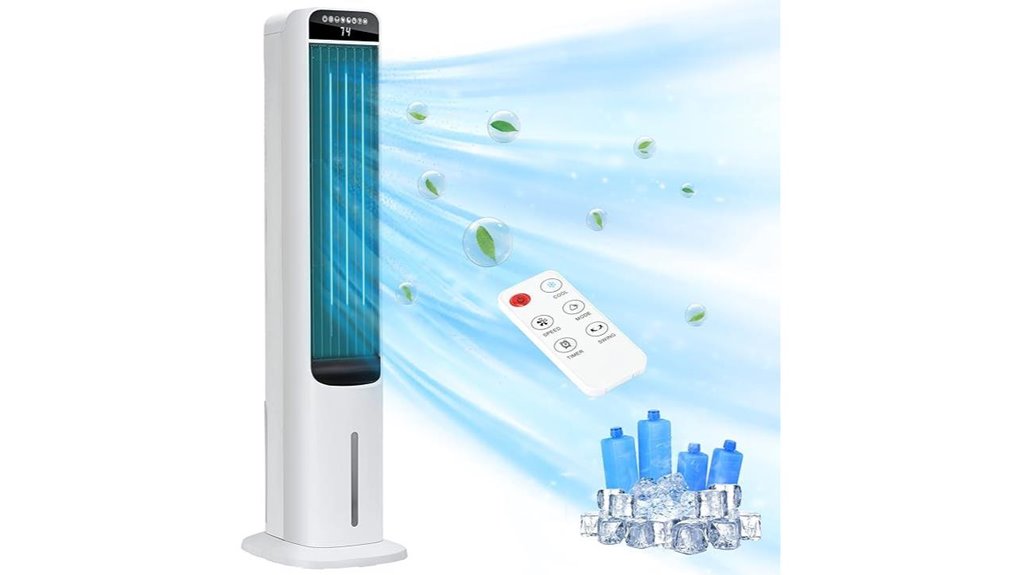
Looking for a compact, windowless cooling solution that doubles as a humidifier and air cooler? This Windowless Portable A/C with Remote and Oscillating Fan delivers. It’s a 3-in-1 evaporative cooler: cooling fan, humidifier, and windowless air conditioner. Choose from Low, Medium, or High, with Normal, Natural, Sleep, or Cool modes across 4 settings. It cools spaces up to 300 sq. ft. and uses 80W, with 12H timer and 30s auto-screen-off. The 120° oscillation distributes air evenly. Weighing 12 lbs, it’s portable via built-in handle, includes ice packs, washable filters, and a remote for easy operation.
Best For: Homeowners or renters seeking a compact, windowless cooling solution that also humidifies and doubles as a portable air conditioner for small- to medium-sized spaces.
Pros:
- 3-in-1 evaporative cooler (cooling, humidifying, windowless A/C) with Ice packs for faster cooling
- Portable and lightweight (12 lbs) with built-in handle and 120° oscillation for even air distribution
- Low energy use (80W), remote control, 12H timer, and easy maintenance with washable filter and detachable components
Cons:
- Best suited for spaces up to 300 sq.ft; less effective in high-humidity environments
- Requires regular water refills and ice packs for optimal cooling; ongoing maintenance
- Evaporative cooling performance can vary with room humidity and airflow conditions
Factors to Consider When Choosing Portable AC Alternative Fan
When choosing a portable AC alternative fan, consider its cooling capacity and whether it fits the room size you’re cooling. Look at noise levels, power use, and overall efficiency to balance comfort with cost. Don’t overlook versatility, modes, and how easy it is to maintain over time.
Cooling Capacity Range
How much cooling you get from a portable AC alternative depends on its cooling capacity range, which describes the space it can effectively treat and how quickly it moves air. This range tells you how much heat it can remove, often shown as temperature drop targets (like 45–50°F) or airflow-driven cooling (CFM, ft/s, m/s). Some units promise direct surface cooling (to 60°F or 22°C) for instant relief, but that may not cool an entire room. Evaporative or misting methods can help in dry spaces, yet their effectiveness hinges on humidity and room size. Also, consider the oscillation angle and airflow reach (80°–90°) to gauge how broadly you’ll feel relief. Fan-only or hybrid models may cite different ranges, shaping where and how fast cooling occurs.
Noise Level Considerations
Noise level matters. When you’re choosing a portable AC alternative, look for decibel targets that reflect quieter operation, especially if you’ll use the unit overnight. Some models offer sleep or ultra-quiet modes and optimized impeller designs to minimize audible noise. Brushless DC motors paired with streamlined airflow—think Coanda-inspired designs—can substantially cut noise during high-CFM airflow. Remember that reported noise varies by speed; higher speeds reliably get louder, so pick a model with a quiet performance at your typical setting. For night-time use, favor units that advertise sub-40 dB performance or dedicated sleep modes. Clear labeling helps you compare before buying, ensuring you balance cooling needs with comfortable, quiet operation in your space.
Power and Efficiency
Power and efficiency go hand in hand when choosing a portable AC alternative fan. You’ll want a high-efficiency motor, like brushless DC, and turbo wind capabilities to maximize airflow per watt. Compare maximum wind speeds and cooling reach to assess power effectiveness in larger rooms. Check power consumption in watts and whether the unit includes energy-saving modes, such as Sleep or Eco, to cut ongoing draw. For cordless models, evaluate runtime per charge and recharge time to gauge sustained cooling potential. Look for multi-speed options or wide gear ranges and turbo wind features (1–199 speeds) to tailor power to comfort needs without wasting energy. Prioritize overall efficiency alongside performance for balanced, practical cooling.
Versatility and Modes
Versatility and modes matter because a portable AC alternative should adapt to different tasks and times of day. Look for multiple modes—Normal, Natural, Sleep, Auto, Cool—to tailor airflow and cooling to activities and rhythms. A broad range of speeds (often 8–199+ or 4–8 levels) lets you fine‑tune comfort and minimize noise. Some units merge cooling, humidifying, and fan functions, expanding capabilities beyond simple airflow. Oscillation, typically 80°–120°, plus adjustable outlet direction, improves coverage for varied room layouts. Remotely controllable or touch-panel interfaces boost convenience for tweaking modes and wind speed without moving the unit. Prioritize models that balance mode variety, speed options, and integrated features, so you can switch seamlessly between tasks and times of day without clutter or disruption.
Maintenance Requirements
Maintenance matters because easy cleaning keeps airflow efficient and the unit reliable. When you pick a portable AC alternative, check how removable components are kept clean: water tanks, cooling pads, and rear grilles should detach for regular maintenance. Detachable filters and washable parts lessen upkeep while preserving airflow over time. Look for units with easy-access front grills and rear impellers to simplify inspections and routine cleaning tasks. Be aware that some models include self-dan protection features or automatic shutoffs, which can affect how often you perform maintenance. Portable designs with modular accessories—ice packs or USB charging—may require periodic replacement of consumables. Choose a unit whose maintenance tasks feel straightforward, with clear serviceability and readily available replacement parts to sustain performance.
Portability And Size
When choosing a portable AC alternative, size and weight matter because you’ll likely move it between rooms or store it when not in use. Start by checking the unit’s dimensions and weight to ensure you can relocate it easily or tuck it away. Portable towers around 12 lbs with handles and compact footprints illustrate practical options. Look for a built-in carrying handle or a compact form factor, whether tower or handheld, to simplify transport and relocation. Consider portable features like lanyards, removable water tanks, or detachable components that reduce bulk for travel. Verify multi-position use—desktop, floor-standing, or neck-strap—to suit different spaces and activities. Finally, compare footprint in inches and weight in pounds to match your available space and lifting capability.
Common Questions
Do These Fans Actually Lower Room Temperature?
Yes, they can lower the apparent temperature, but not as much as true air conditioners. An interesting stat: ceiling fans alone can make you feel up to 4°F cooler through evaporation and airflow. With portable fans, you boost comfort by improving air exchange and humidity feel, yet you won’t chill a hot room noticeably without a real cooling unit. Use fans strategically—point them toward you, ventilate heat outside, and pair with shade or a dehumidifier.
How Loud Are These Portable Alternatives During Operation?
They’re generally quieter than traditional window AC units, but loud enough to notice in a quiet room. Expect low to mid-range models around 40–50 dB, with higher-output modes pushing into the 60–70 dB range. If you need near-silent operation, pick eco or sleep modes with gradual fan speed. Placement matters: keep it away from walls, use a lower setting for continuous comfort, and check for noise-canceling features before you buy.
Can They Run on Battery Power All Day?
They can’t run all day on battery power. Most portable AC alternatives run on AC power, with battery packs serving only as short-term backups or for limited runtimes. If you need day-long cooling, look for models with large internal batteries, solar charging options, or the ability to run off a high-capacity external pack. You’ll likely need to plan for charging breaks or supplemental power sources to maintain comfort throughout the day.
Are Replacement Parts Readily Available and Affordable?
Replacement parts are generally available and affordable for popular portable AC alternatives and fans. You’ll find filters, housings, motors, and remote batteries at major retailers and the manufacturers’ sites. Expect interchangeable parts across models from the same brand, with a few higher-end units costing more for premium components. Keep your model number handy, compare prices, and check warranty terms. If you DIY, ensure compatibility before buying replacements to avoid compatibility issues or outages.
Do They Require Any Special Maintenance or Filters?
Yes, they do require simple maintenance and occasional filters. Start by cleaning dust from vents and coils, then check and replace filters as needed—usually every 1–3 months depending on use. Keep drainage lines clear and wipe down exterior. It’s not glamorous, but it keeps performance steady and prevents odors. Use manufacturer-recommended filters and schedules, and you’ll enjoy efficient cooling without headaches. Regular checks save money and extend longevity.