
As you weigh the 10 best reflective window films for heat blocking in 2026, you’ll weigh UV and IR rejection, privacy, and ease of installation side by side. Some options are double-foil or bubble-insulated, while others are adhesive-free, static cling designs that protect interiors without residue. You’ll also notice durability and glare reduction for kitchens and offices. It all comes down to which combination fits your space and budget—and what steps you’ll take next to test them.
Key Points
- Reflective window films that offer high heat rejection: many options block 80–97% of IR and up to 95% of radiant energy to cut cooling costs.
- Prefer adhesive-free or static-cling designs for easy removal, reuse, and renter-friendly installations.
- Consider dual- or multi-layer reflective films with UV protection to reduce glare and protect interiors.
- Look for installation versatility: roll or film formats compatible with windows, doors, RVs, and curved or irregular surfaces.
- Note nighttime privacy trade-offs and surface/pane compatibility (avoid double-pane compatibility issues and textured surfaces).
MRPAPA Reflective Insulation Foam Roll 48″x10ft
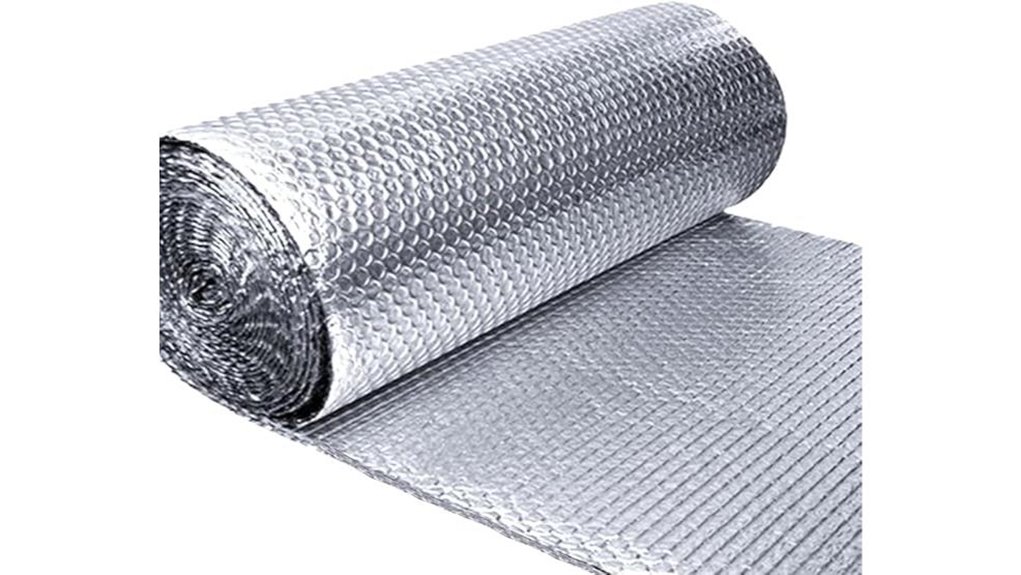
Considering the MRPAPA Reflective Insulation Foam Roll (48″ x 10 ft) is built with double aluminum foil and polyethylene bubble, it’s a standout choice if you want maximum radiant heat reduction without heavy installation. You’ll get a double aluminum structure with a B2 fire-protection rating, reflecting up to 95% of radiant energy. This roll suits windows, attics, garage doors, walls, floors, RVs, and around fireplaces, delivering heat retention in winter and heat blocking in summer. It’s easy to cut, install, and clean, and includes 70 self-adhesive pads to secure panels. Warranty support and returns accompany a no-risk purchase.
Best For: Homeowners and DIY enthusiasts seeking a lightweight, easy-to-install radiant barrier to reduce heat transfer in windows, attics, garages, walls, floors, RVs, and around fireplaces.
Pros:
- Highly effective at reflecting up to 95% of radiant energy with a double aluminum foil construction
- Lightweight, easy to cut, install, and clean; includes 70 self-adhesive pads for secure mounting
- Provides winter heat retention and summer heat blocking, plus soundproofing and privacy benefits
Cons:
- May arrive folded with creases that take time to rebound or repair
- Adhesive pads are suited for flat, smooth surfaces and may not adhere well to textured or irregular surfaces
- Requires careful handling to avoid creasing or damage during installation and storage
Volcanics One-Way Privacy Window Film (17.5×78.7″)
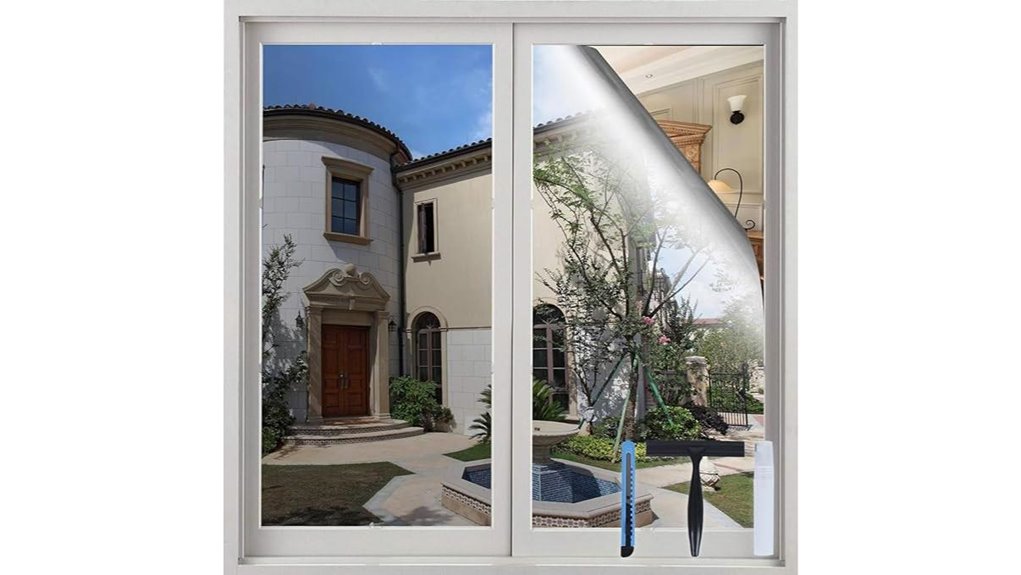
Volcanics One-Way Privacy Window Film is a standout pick for renters and temporary privacy needs thanks to its adhesive-free, static-cling design that’s easy to install and remove without residue. This film measures 17.5 x 78.7 inches and fits windows up to that size. It uses a static-cling, silver-toned surface for a one-way mirror effect, offering daytime privacy while letting you see out. At night, the effect fades, so you’ll want curtains or blinds. It blocks up to 99% UV and up to 85% IR, aiding energy savings. Included tools simplify application, and removal remains residue-free and reusable. Suitable for smooth, clean surfaces.
Best For: Renters and temporary privacy needs seeking easy, residue-free window coverage that’s quick to install and removable.
Pros:
- Easy, adhesive-free installation with static cling and reusable capability
- One-way mirror effect provides daytime privacy while still allowing outdoor visibility
- UV and IR protection help reduce sun damage and potential energy savings
Cons:
- Nighttime privacy is reduced; curtains or blinds recommended
- Effectiveness depends on lighting contrast; may be less noticeable on cloudy nights or indoor-bright conditions
- Fits windows up to 17.5 x 78.7 inches; may not fit larger or irregularly shaped windows
STATINT One Way Privacy Window Film, 17.5″ x 6.5
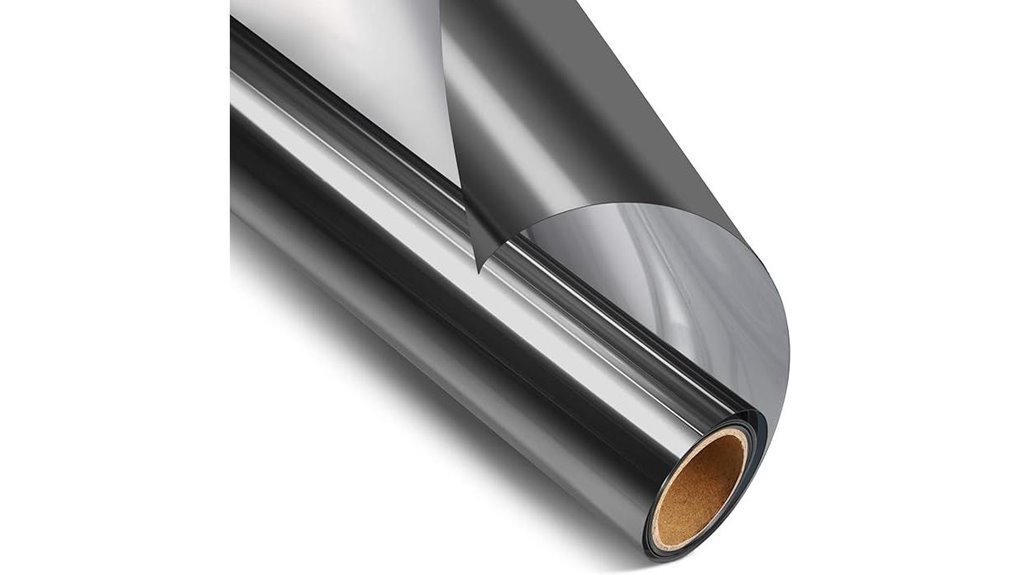
Pros:
- Static-cling design; easy to apply and remove without glue or residue
- 90% UV rejection helps protect interiors and reduce fading
- 13% VLT balances outdoor visibility with glare reduction
Cons:
- Privacy reversal possible at night when interior is brighter
- Not suitable for double-pane windows
- Not a full replacement for air conditioning or heating control
KESPEN Window Privacy Film, UV Blocking, Black-Silver
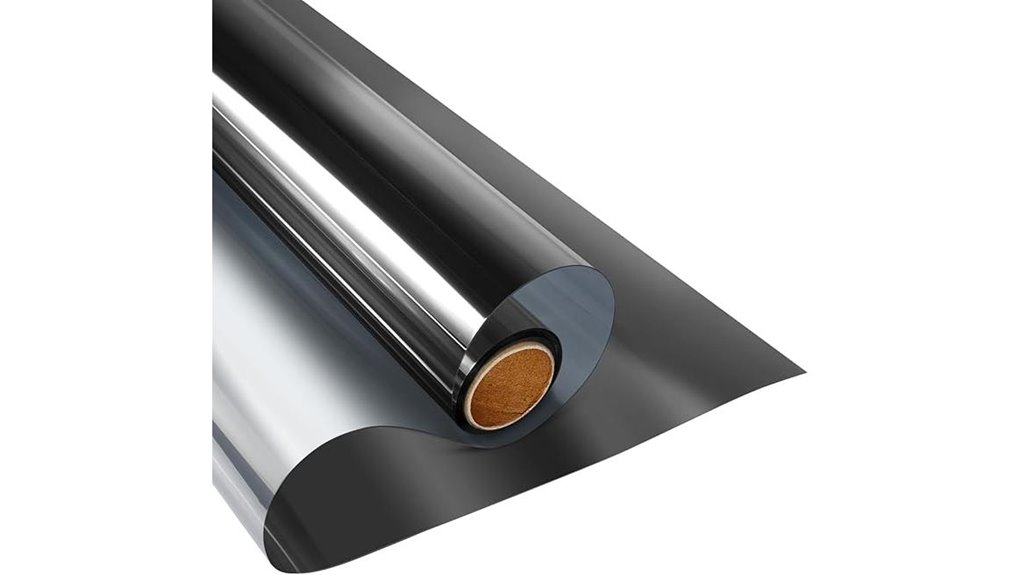
KESPEN Window Privacy Film is a strong pick if you want daytime privacy without sacrificing visible light, thanks to its one-way mirror effect. You get one-way daytime privacy: outside sees a mirror, but at night or when inside is brighter, the effect fades; you may still need curtains if needed. It blocks 82% infrared and 90% UV, reduces glare, and offers 12% VLT for some view. The vinyl, static-cling film installs with ample water on both sides and removes without residue. Not for double-paned, frosted, curved glass. Dimensions about 17.5 in by 6.5 ft; suitable for kitchens, doors, and offices. Warranty available.
Best For: Anyone seeking daytime privacy with visible light transmission on standard glass surfaces (not suitable for double-paned, frosted, curved, or cut glass).
Pros:
- Maintains daytime privacy with a one-way mirror effect while still allowing some view (12% VLT).
- Blocks 82% infrared and 90% UV, reducing glare and protecting interiors.
- Easy to install and remove (static cling, no residue) and reusable on smooth glass.
Cons:
- Not suitable for double-paned, frosted, curved, or cut glass.
- Privacy effect diminishes at night or when interior lighting is stronger than exterior; may require curtains.
- Requires proper preparation and cleaning of glass surfaces for best adhesion.
WPCTEV One Way Mirror Window Film, 17.5×6.5 ft
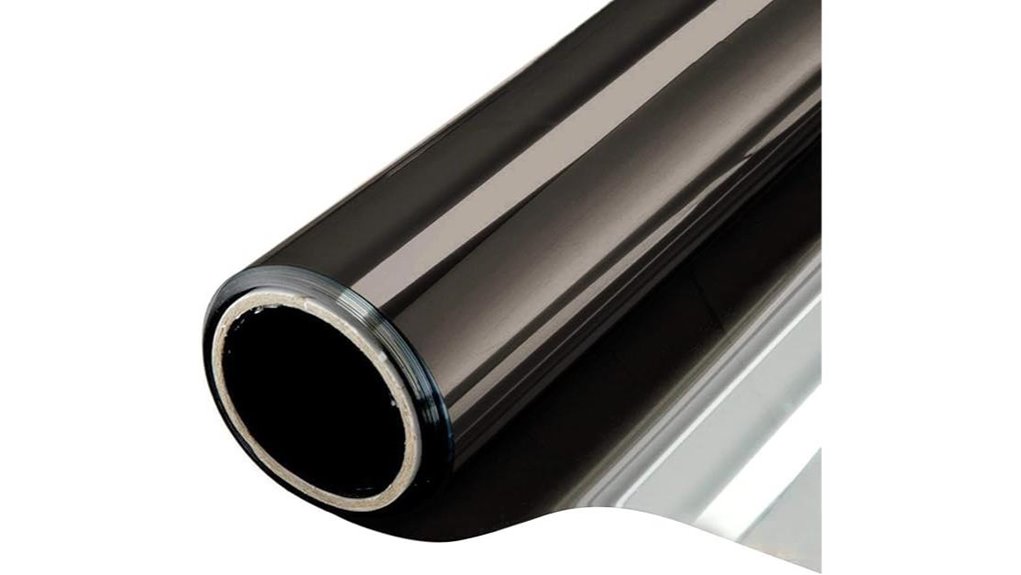
If you need a non-adhesive, one-way mirror film that delivers strong heat control and daytime privacy, WPCTEV’s One Way Mirror Window Film stands out with its 6-mil PVC thickness and static cling install. This film blocks 85% of infrared rays and 97% of UV rays, preserving interior furnishings while reducing glare with 10% VLT. It comes in Black Silver, sized 17.5×6.5 ft, and installs glue-free on clean glass via a soap-and-water soak for best cling. Durable, anti-scratch PVC offers good thermal insulation; nighttime privacy is limited, so pair with curtains after dark. Ideal for homes, offices, and commercial spaces. Packaged by WPCTEV.
Best For: Home and office users seeking strong daytime privacy and heat control with a non-adhesive, easy-to-install window film.
Pros:
- Non-adhesive static cling installation; easy to apply and remove
- Blocks 85% infrared rays and 97% UV rays, protecting furnishings
- Reduces glare with 10% VLT while providing daytime privacy
Cons:
- Nighttime privacy is limited; may require curtains after dark
- Requires careful preparation and ample soap/water for proper cling
- 6 mil thickness may be less rigid on very curved or irregular glass surfaces
YoleShy Double Reflective RV Window Insulation Film
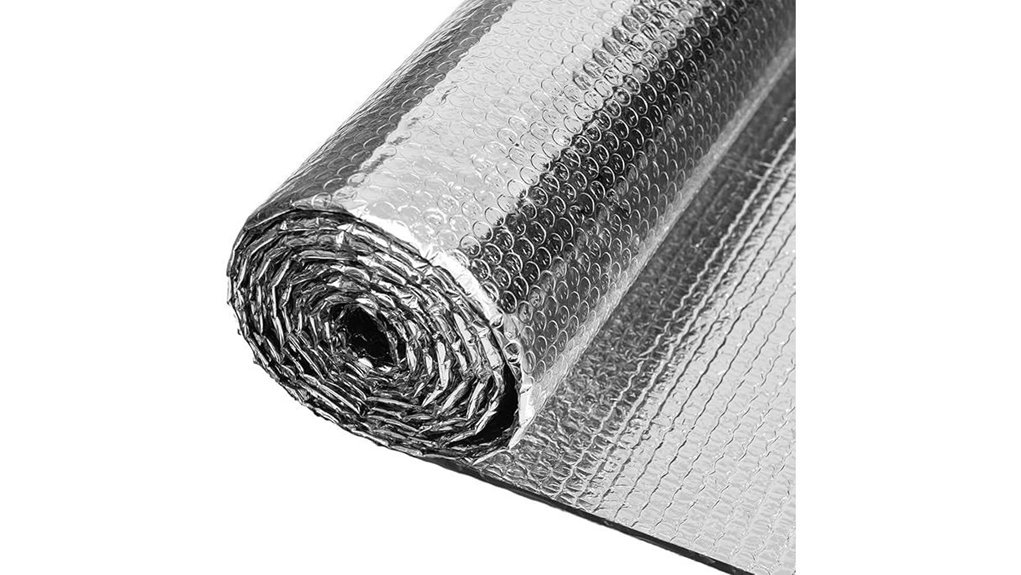
Looking for a budget-friendly option that still delivers solid heat blocking for RVs and multi-use spaces? The YoleShy Double Reflective RV Window Insulation Film measures 48 inches by 10 feet and includes 132 self-adhesive pads for secure mounting. It uses double-sided aluminum foil with a vacuum-sealed polyethylene bubble to boost reflectivity and insulation, protecting against strong sunlight without altering indoor conditions. This film fits windows, attics, garage doors, walls, floors, and RVs, delivering summer heat reduction and winter insulation. Note it ships folded; creases won’t affect performance, and the pads ensure easy, reliable installation across surfaces.
Best For: Budget-conscious RV owners and multi-use space occupants seeking effective heat blocking and insulation without a high price.
Pros:
- Effective heat reflectivity with double-sided aluminum foil and vacuum-sealed bubble design
- Large 48″ x 10′ size suitable for windows, RVs, attics, garage doors, and more
- Includes 132 self-adhesive installation pads for secure, easy mounting
Cons:
- Ships folded and may arrive with creases (though claimed not to affect performance)
- Installation may require careful handling to ensure adhesion across curved or irregular surfaces
- Potential fit limitations on very small or uniquely shaped windows or openings
Double Reflective Bubble Foil Insulation (47×120)
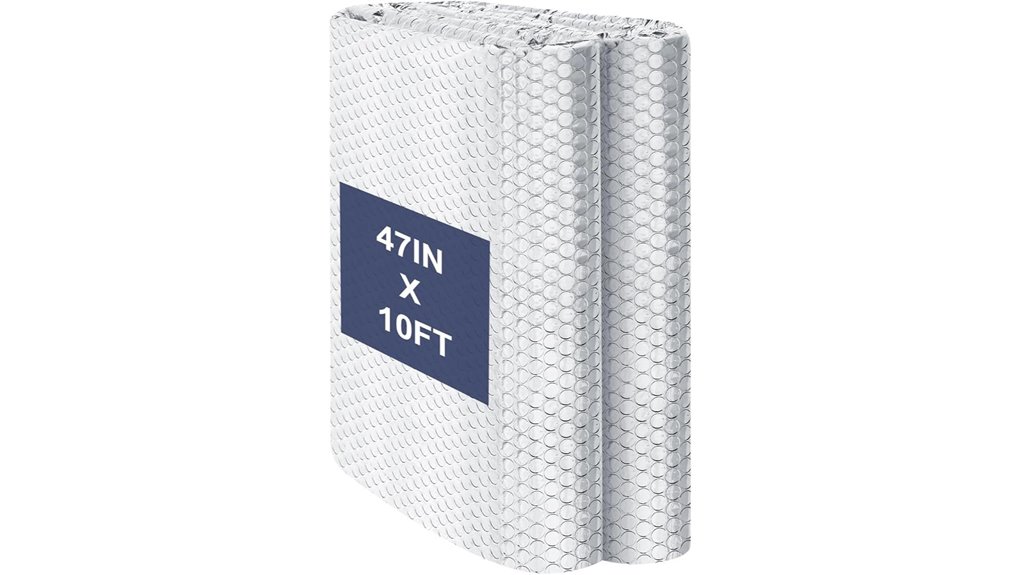
Pros:
- Easy to cut and install with included 60 self-adhesive pads
- Reusable and durable reflective bubble foil construction
- Provides heat reflection for summer comfort and winter warmth, plus opaque privacy
Cons:
- Adhesive pads may leave residue if frequently removed
- Large sheet may be cumbersome to handle in tight spaces
- Lightweight material; may require careful placement to avoid wrinkling or gaps
LEMON CLOUD Window Film – Rainbow Tulip Privacy
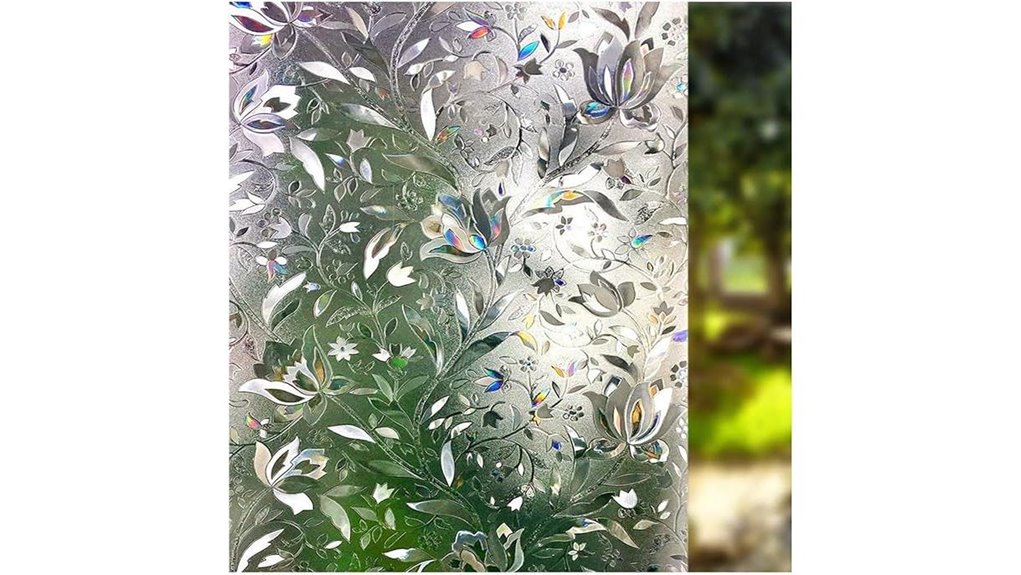
Pros:
- Glue-free, reusable, and damage-free removal suitable for renters.
- Easy, water-assisted installation with static adhesion; no sticky residue.
- Provides semi-privacy with soft natural light and adds a rainbow-lit decorative effect.
Cons:
- Semi-privacy may not satisfy those needing full anonymity.
- Design is fixed to the Rainbow Tulip pattern; changing designs requires replacement.
- May require careful alignment and trimming for non-standard window sizes.
Winemana Window Insulation Roll—Reflective Heat Shield
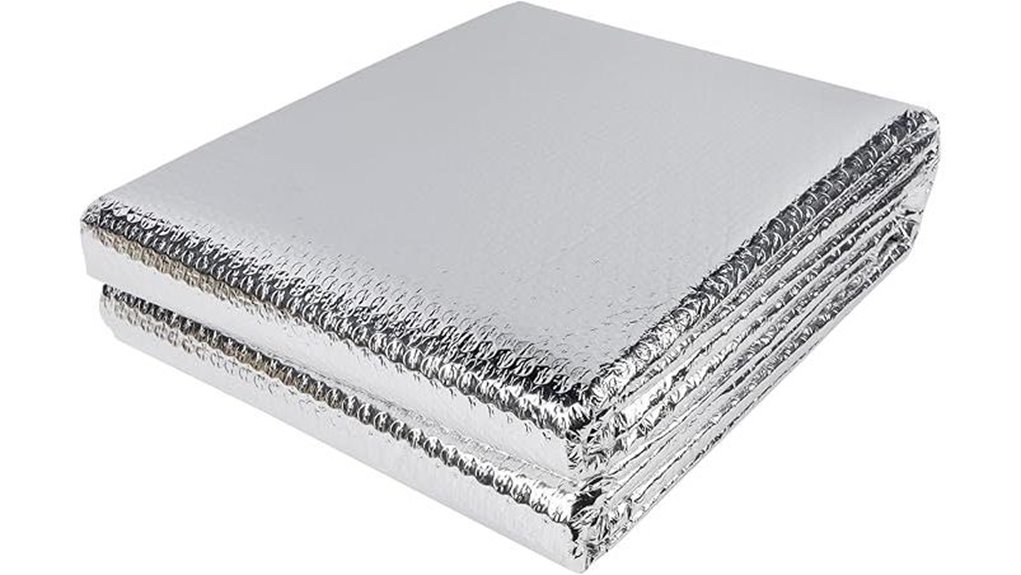
If you’re seeking an affordable, versatile solution to curb heat across windows, the Winemana Window Insulation Roll—Reflective Heat Shield stands out with its high-efficiency multi-layer reflective aluminum that blocks up to 90% of solar radiation, keeping cars, homes, and RVs cooler and more comfortable. This tear-resistant, double-sided foil insulation withstands high temperatures and outdoor exposure, delivering an airtight seal for maximum thermal efficiency. Easy to install on car windshields, windows, patios, or tents, it uses tape, suction cups, clamps, or hooks for a secure fit. Lightweight, foldable, and storage-friendly, it suits basements, greenhouses, and outdoor spaces. Overall, it’s versatile and durable for year-round heat protection.
Best For: Affordable, versatile heat protection for homes, vehicles, and outdoor spaces needing easy insulation and glare reduction.
Pros:
- High-efficiency heat reflection blocks up to 90% of solar radiation for cooler interiors and vehicles
- Tear-resistant, durable multilayer aluminum film designed for outdoor exposure and high temperatures
- Easy, flexible installation with multiple attachment options (tape, suction cups, clamps, hooks) and foldable storage
Cons:
- May require multiple sheets or larger panels for full coverage on bigger windows
- Some users may need additional tools or accessories for a secure fit in windy outdoor settings
- Reflective material could be less effective if not properly sealed around edges, potentially reducing efficiency
Volcanics One Way Privacy Window Film with Tools
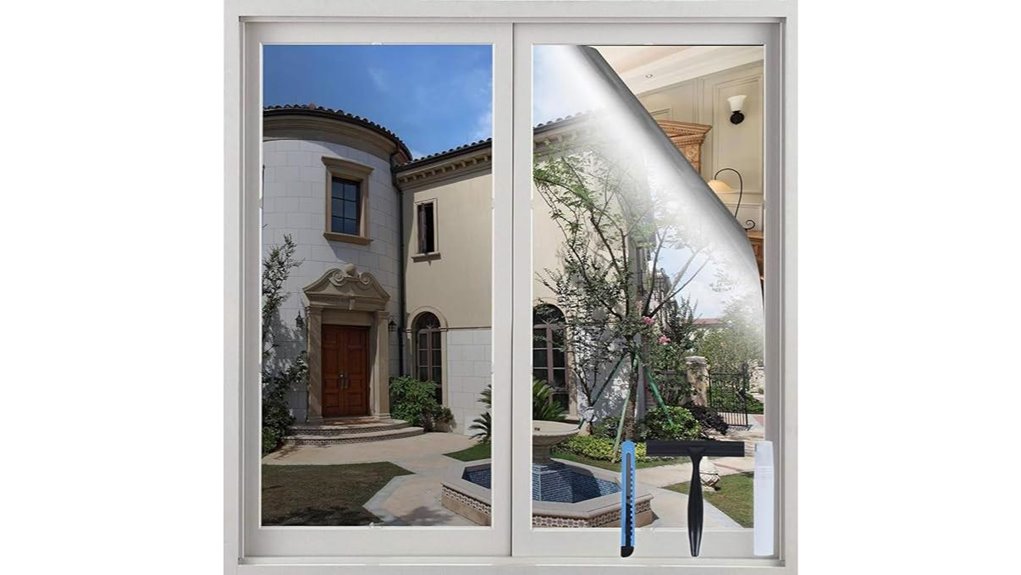
Pros:
- Adhesive-free, easy to apply and remove without residue; reusable for multiple uses.
- Provides daytime privacy with a mirror-like surface and offers UV/IR protection.
- Includes free installation tools (scraper, cutting knife, watering can) for convenient setup.
Cons:
- Nighttime privacy may be reduced unless curtains are used; visibility depends on lighting conditions outside.
- Reflective effect may affect exterior appearance from the inside during certain lighting.
- Only suitable for smooth surfaces; may not adhere well to textured or irregular windows.
Factors to Consider When Choosing Reflective Window Film Heat Blocking
When you pick reflective window film for heat blocking, consider how much light you want to transmit and your privacy needs. Look for strong UV and IR blocking, so interior items stay protected while you still see out. Also weigh installation, maintenance, surface compatibility, durability, and longevity to ensure it fits your window type and long-term goals.
Light Transmission And Privacy
Choosing reflective window film for heat blocking hinges on light transmission and privacy. Your VLT choice directly impacts how open or private rooms feel; lower VLT means darker tint and stronger privacy, while higher VLT keeps more view but less concealment. Consider whether you prefer daytime privacy from one-way or mirror-style films, which rely on brighter outdoor lighting and can reverse at night when interior lights are stronger. Anti-glare and UV/IR blocking features further influence how much ambient light enters while cutting glare; typical UV blocking sits around 90–99% and IR blocking around 85–97%, helping heat reduction without sacrificing every view. If you want flexibility, static-cling non-adhesive films let you reposition without residue, aiding long-term light balance and privacy goals.
UV And IR Blocking
Do you know how UV and IR blocking shape heat control and interior protection when you’re choosing reflective window film? UV blocking measures how well the film prevents ultraviolet rays, with many options offering about 85–99% UV reduction. IR blocking shows the film’s ability to reflect or absorb heat-carrying infrared radiation, typically around 80–99% for heat-control films. Higher UV and IR blocking usually means better protection for interiors and furnishings from fading and heat gain, but can lessen visible light transmission. Some films claim near-total UV rejection (up to 99%), while IR blocking often sits around 85% or higher to cut heat transfer significantly. The balance with visible light transmission determines daytime privacy and glare reduction while preserving view clarity.
Installation And Maintenance
Installation is about getting the film to cling without bubbles and slippage, and it starts with a clean, smooth glass surface. You’ll often choose static cling or adhesive-free films, which rely on a perfect glass base for strong contact. Most kits include tools—scrapers, knives, or water sprayers—to help alignment and minimize air bubbles during setup. Smooth, blemish-free glass yields the best results, and many films aren’t suitable for double-pane, frosted, curved, or textured surfaces. You use water or soapy solution to activate cling; extra moisture aids positioning but you must minimize it to prevent slipping. Some packages add self-adhesive pads or mounting aids for large panels, and films are designed for residue-free removal and reuse when needed.
Surface Compatibility
When selecting reflective window film for heat blocking, start by confirming it’s designed for smooth, clean glass, since even small imperfections can reduce cling and adhesion. Check that the film is compatible with your glass type, especially if you have both single- and double-pane panes, as some films aren’t suitable for insulated glazing. Verify the film uses static cling or non-glue adhesives to ensure easy removal without leaving residue on glass surfaces. Look for films rated for high reflectivity and UV/IR blocking to match your heat-blocking goals and energy savings. Ensure product notes specify safe installation with water or soapy solution on both sides, and caution against dusty or damaged surfaces that could compromise performance.
Durability And Longevity
Durability hinges on the film’s material quality, with double aluminum foil or vinyl constructions offering tear resistance and long-term performance under sun exposure. You’ll want to weigh how bubble or multi-layer builds, like bubble foils, boost impact resistance while preserving insulating ability over time. Adhesive-free or static-cling options rely on surface cleanliness and proper installation to keep adhesion and prevent peeling. If your film arrives folded or creased, expect a temporary fit issue, but don’t worry—once acclimated, long-term thermal efficiency remains intact. Weather and temperature cycling can stress reflective surfaces, so choose higher-grade films designed to endure repeated summer heat and winter cold. In short, durability comes from material quality, construction type, and a reliable installation that maintains performance across seasons.
Energy Savings Potential
Energy savings from reflective window film hinge on how well it blocks infrared radiation and how you install and maintain it. When choosing, look for films that promise strong IR rejection (often 80–99%, depending on type) and substantial UV blocking (up to 90–99%), since fading protection helps interior longevity and occupant comfort. The energy impact typically reaches about a 20–30% cooling cost reduction, but this hinges on proper installation and daytime privacy features. Correct surface prep and ensuring the film’s reflective properties endure through cleaning matter as much as the initial spec. Daytime performance matters too, because higher reflectivity reduces heat gain while preserving outdoor visibility. Balance installation requirements with your climate, orientation, and privacy needs to maximize real savings.
Common Questions
How Durable Is the Reflective Coating Over Time?
The reflective coating holds up well over time if you choose a quality film and follow proper installation. It’s designed to resist fading, peeling, and yellowing, typically lasting 10–15 years with minimal performance loss. You’ll want to avoid harsh cleaners and abrasive scrubs, which can scratch the surface. Regular cleaning with mild soap and water helps maintain reflectivity. If you notice peeling or delamination, replace the film to keep energy savings intact.
Does Film Affect Window UV Protection Ratings?
Yes, film can affect your window’s UV protection ratings. If the film blocks or absorbs UV light, your interior won’t fade as quickly and you’ll be safer from UV exposure. Look for products labeled with UV-blocking percentages (often up to 99%). Be aware some films reduce visible clarity, so balance UV protection with light you want. Install correctly, and you’ll maintain protection while keeping a comfortable view.
Can the Film Be Easily Removed Without Residue?
Yes, you can remove it without residue, especially if you choose a high-quality film and follow proper removal steps. Start by loosening an edge with a squeegee or plastic card, then peel slowly at a low angle. Use warm soapy water or adhesive remover to dissolve any remaining glue, and wipe clean. Avoid forcing it, as that can leave marks. If a residue stays, re-wet and peel again.
Will It Distort View From Inside or Outside?
Yes, it won’t distort your view noticeably, either inside or out. Think of it as a clear drizzle on glass—reflective at certain angles, but you still see through when you’re near or indoors facing outdoors. If you’re off-angle, you might notice a slight tint. Choose a low-to-mid reflectivity for minimal distortion, and ensure the film is professionally installed to maintain true visibility from both sides.
What Installation Tools Are Essential for Best Results?
You’ll need a few essential tools for best results: a utility knife with fresh blade, a squeegee, a microfiber cloth, a spray bottle with soapy water, a measuring tape, a ruler or level, a glass scraper blade, and a corner/edge roller. Use a spray bottle to dampen glass, apply film evenly, and squeegee out air and excess solution. Take your time, align precisely, trim edges, and wipe away any residue for a clean, professional finish.