
Did you know that rechargeable car coolers can squeeze 5–10+ hours of run time on a single charge? As you plan trips for 2026, you’ll want options that mix portability, multi-temperature control, and quiet operation. You’ll find models with 12V DC or USB power, dual zones, and built-in ice packs, plus apps to tweak settings on the go. Curious about which fits your setup and budget? Let’s explore what to look for and how these choices stack up.
Key Points
- Rechargeable portable air cooler offers 3 speeds, 5–10h runtime, USB power options, and immediate cooling with ice water in the tank.
- Setpower 21-quart car fridge provides 68°F to -4°F cooling, dual fresh/freeze spaces, automatic defrost, and app control.
- 12V car fridge/warmer (6 qt) supports 40°F–140°F range, includes home adapter, and fits about 8 standard cans.
- Portable AC mini evaporative cooler runs on Type-C, cordless, with 500 ml reservoir and multi-hour operation.
- Cooler bag accommodates 45 cans, keeps cold up to 8h and warm up to 6h with durable 1680D fabric and insulation.
Rechargeable Portable Air Cooler, 3 Speeds, 5-10h
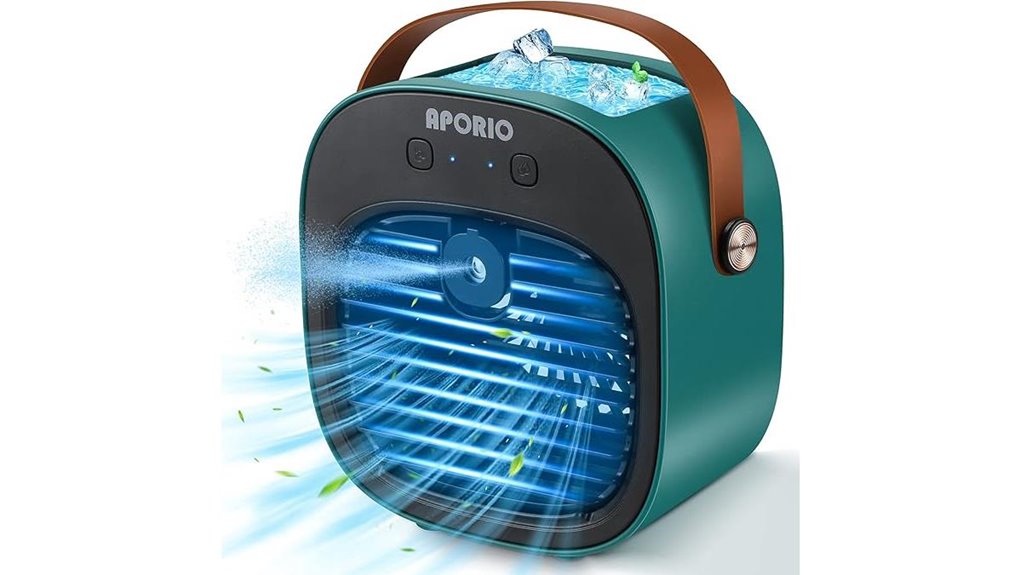
If you want a compact, battery-powered cooler that keeps you cool overnight without plugging in, the Rechargeable Portable Air Cooler is a strong pick. It runs on a 5200mAh battery with 5–10 hours of runtime, depending on speed. You control airflow with three adjustable wind speeds and direct it via a multi-directional vent. Ice water in the tank delivers immediate cooling, and USB power options—adapter, power bank, computer, or car charger—keep it ready anywhere. True wireless and lightweight, it’s easy to clean with a removable deflector. No refrigerant, low power use, ideal for sleep, travel, and outdoor use.
Best For: Those seeking a compact, battery-powered cooler for sleep, travel, and outdoor use without relying on mains power.
Pros:
- No refrigerant or compressor, low power consumption, and quiet operation
- 5200mAh battery with 5–10 hours of runtime and USB charging options
- Multi-directional vent and removable deflector for easy cleaning and targeted cooling
Cons:
- Limited cooling compared to traditional AC units
- Depends on battery charge; performance varies with speed setting
- Ice-water filling requires periodic replenishment for sustained cooling
Setpower 12V Portable Car Refrigerator 21 Quart
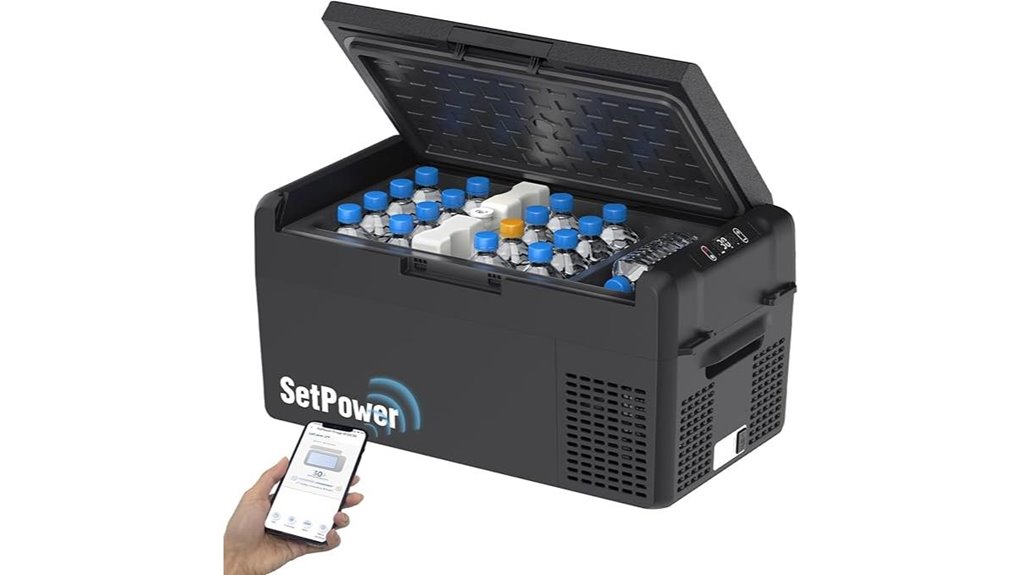
Looking for a compact, reliable 21-quart fridge that fits in tight rigs or SUVs? The Setpower RF20 21 Quart Portable Refrigerator runs on 12V DC, with an AC adapter included and 28W ECO or 40W MAX modes. It cools from 68°F down to -4°F, heating up fast: 15 minutes to 32°F, 45 to -4°F. Weighing 22 pounds, its 24.3” x 13.1” x 11.9” body holds 20 L of fresh food and 20 L of freezer space, plus a built-in ice pack for outage resilience. Control via panel or optional app; reversible door, automatic defrost, three-year compressor support.
Best For: Compact rigs, SUVs, and off-grid or road-trip setups where a portable 21-quart fridge is needed without sacrificing space.
Pros:
- Compact, lightweight 22 lb design that fits tight spaces
- 21-quart capacity with dual 20 L fresh/freeze spaces and built-in ice pack for outages
- 12V DC operation with included AC adapter and optional app control for convenient use
Cons:
- Only 21 quarts total capacity may be limited for larger groups or long trips
- Temperature control relies on manual panel or app; may require setup for optimal outage resilience
- No internal battery; must be powered by vehicle or external power source
12V Car Refrigerator Cooler/Warmer 6 Quarts (Grey)
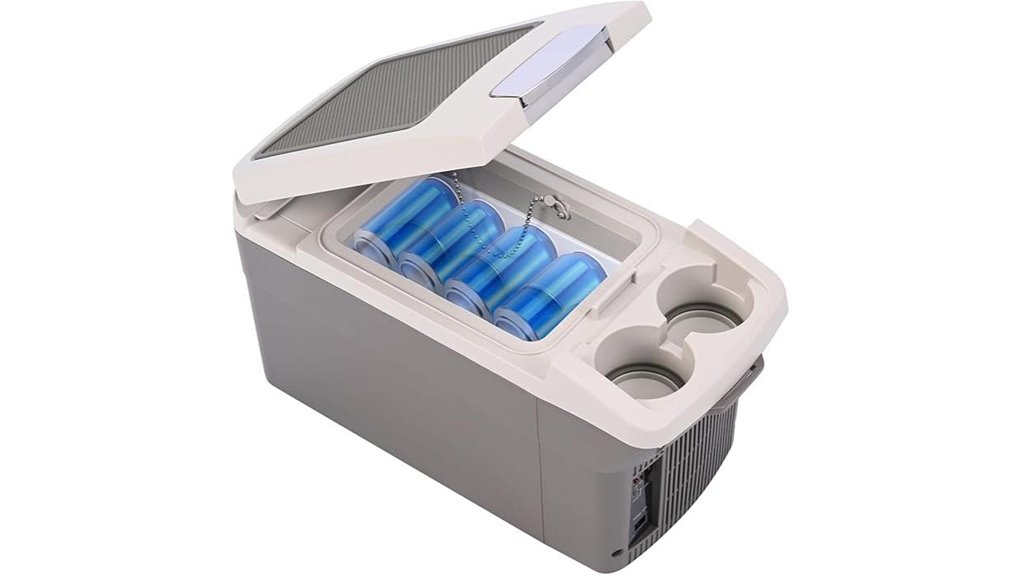
The V Car Refrigerator Cooler/Warmer 6 Quarts (Grey) stands out for its dual 12V cooling and heating capability, making it a versatile choice for both keeping beverages cold and meals warm on road trips or at camp. This 6-quart unit runs on 12V (with an included 110V home adapter), and it cools from 40℉ to 140℉ (5℃–60℃). It’s compact, lightweight, and designed for all 12V vehicles, offering internal space for about 8 standard cans. An aluminum inner liner boosts efficiency, while a brushless fan ensures quiet operation during continuous cooling or heating. External dimensions measure 17.52 x 7.68 x 9.25 inches.
Best For: road-trippers and campers who need a compact, dual-function cooler/warmer that works in most 12V vehicles and can operate from home power as well.
Pros:
- Dual cooling and heating range from 40℉ to 140℉ (5℃–60℃) for versatile use.
- Compact, lightweight, and portable with internal space for about 8 standard cans.
- Quiet operation thanks to a brushless fan and aluminum inner liner for efficiency.
Cons:
- Not compatible with 24V vehicle electrical systems.
- External dimensions are relatively large for ultra-compact car spaces.
- Requires both 12V car power and 110V home adapter for full operation variety.
Rechargeable Portable AC Mini Evaporative Cooler, 2 Speeds
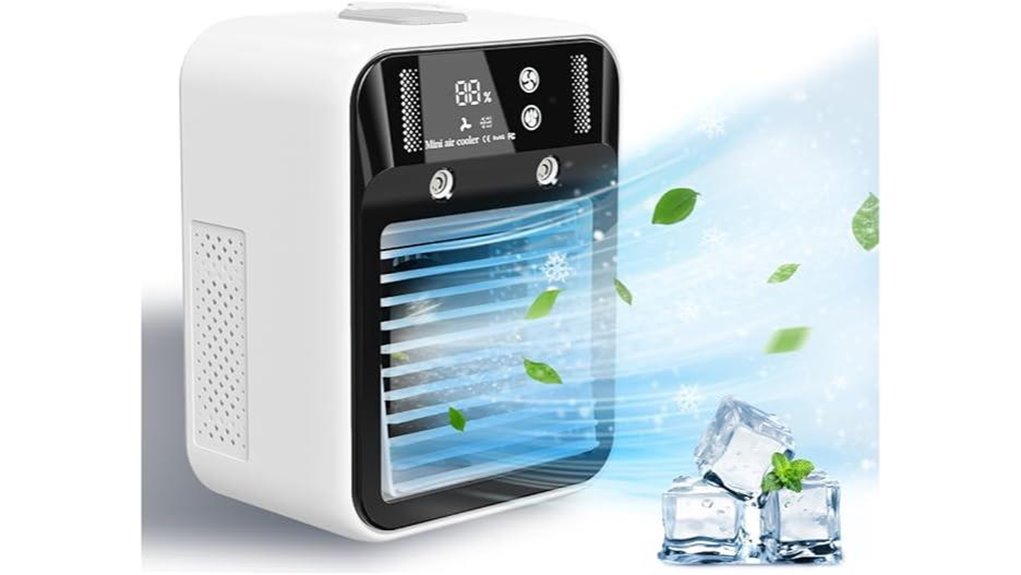
This rechargeable portable AC mini evaporative cooler shines for car campers who want a compact, battery-powered solution with two adjustable speeds and a built-in spray function. It works as a 2-in-1 unit, using nano-mist spraying and ice/water cooling, with a long-press to activate regular mini AC mode for the car. You get two wind speeds plus synchronized spray for hydration, ideal for hot days. It’s freestanding, cordless, and Type-C rechargeable, so you can use it anywhere. With a 500 ml reservoir, it runs quietly, up to several hours, and suits camping, home, or office cooling needs.
Best For: Car campers and portable fans users who want a compact, battery-powered, two-speed evaporative cooler with a built-in spray function for on-the-go cooling.
Pros:
- 2-in-1 functionality (evaporative cooling and humidification) with nano-mist spray
- Cordless operation with Type-C recharge and 500 ml reservoir for extended use
- Quiet performance (~20 dB) and lightweight, freestanding design for easy placement
Cons:
- Limited cooling compared to traditional refrigerant-based AC units
- Small water reservoir may require frequent refills on long trips
- 500 ml capacity and 6W wattage may not meet very high cooling demands in hot environments
Cooler Bag: 45-Can, Cold 8H, Warm 6H Organizer
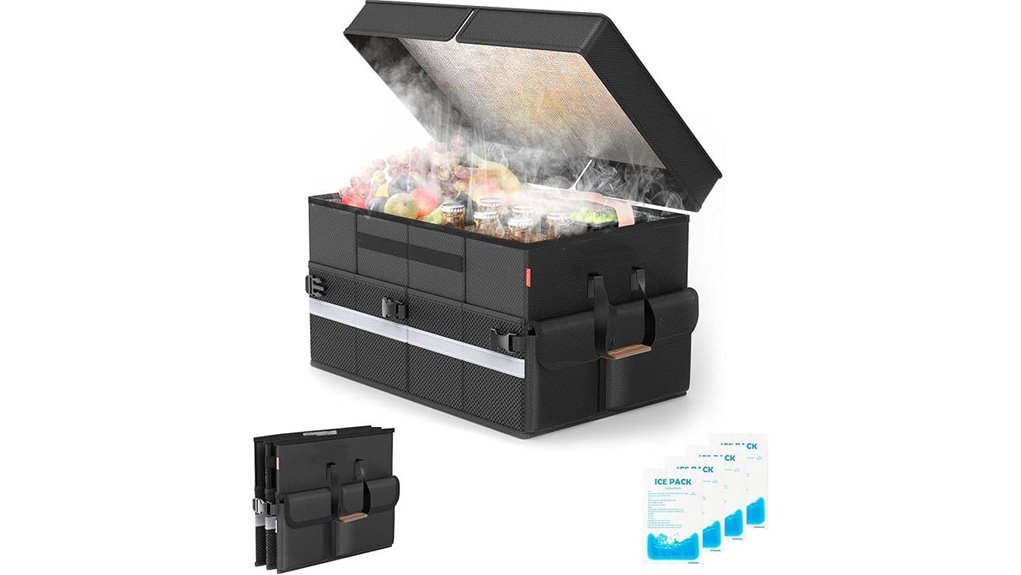
Designed for multi-use warmth and cold storage, this Cooler Bag holds 45 cans and keeps contents cold up to 8 hours or warm up to 6 hours, making it an ideal soft travel cooler and trunk organizer for car campers who want a compact, versatile solution. You get a portable soft cooler that collapses, folds, and stands upright in your trunk, with sturdy handles and a wide opening for easy loading. It uses upgraded 1680D Oxford fabric and thick aluminum insulation to prevent collapse. Do not pour ice directly; use ice packs. Includes interior dividers and exterior pockets for quick access.
Best For: Soft travel cooler users who need portable, collapsible storage that doubles as a trunk organizer for camping trips, beach days, picnics, and work lunches.
Pros:
- Collapsible, foldable design saves space when not in use
- Keeps contents cold up to 8 hours and warm up to 6 hours with thick aluminum insulation
- Interior adjustable dividers and exterior pockets for versatile organization
Cons:
- Not suitable for direct ice contact; requires ice packs for longest cooling
- 6-pound weight plus full load may be noticeable in light-duty use
- Soft-sided design may offer less rigid protection compared to hard coolers
Factors to Consider When Choosing Rechargeable Cooler for Car Camping
When you pick a rechargeable cooler for car camping, start with battery life and cooling power to match your trip length and food needs. Consider power source options, portability, and weight so it fits your vehicle and setup, while keeping temperature control within your target range. Balancing these factors helps you choose a unit that’s reliable, flexible, and easy to use on the road.
Battery Life Considerations
Battery life is a key factor because it determines how long your cooler can run between charges on the road. Runtimes vary, from several hours to over half a day, depending on model and speed setting. Larger capacity batteries (measured in mAh or Wh) stretch that runtime but add weight and size to the unit. Higher fan speeds drain the battery faster, reducing usable runtime unless efficiency features or lower power modes balance the draw. Charging options matter too: USB-C or dedicated DC ports influence how quickly you restore power during trips or when using portable power banks. Real‑world runtime differs from specs, affected by ambient temperature, ice or water use, and whether the unit runs in eco/low‑power modes. Plan according to typical trip length and power availability.
Cooling Power Range
Cooling power range directly affects how quickly and how low your cooler can chill, so it’s worth evaluating how fast a unit moves from ambient to target temps and the span it covers. You’ll see ratings like 77°F to 32°F in about 15 minutes or down to -4°F with some portable fridge/freezer models, signaling aggressive cooling. Some units publish continuous cooling capacity in watts, such as 28W ECO vs 40W MAX, which ties to speed and efficiency reaching set temps. Dual-function models widen the span, from warm-retained 68°F to as low as -4°F, expanding usable cooling power. Ice packs or built-in systems can extend performance during outages, effectively broadening the practical cooling range when power isn’t steady. Rapid time-to-target temps is a key indicator of power.
Power Sources Flexibility
Power sources flexibility is critical for a car-camping cooler, ensuring you stay powered whether you’re on the road, at a site, or back home. You should look for multiple power options, like USB, 12V car power, and an AC adapter, so you can use it during travel, camping, or indoors. A battery-powered unit with a stated runtime, such as 5–10 hours per charge, lets you rely on it overnight without constant recharging. Compatibility with car power matters, ideally with built-in 12V DC and an included AC adapter for mixed destinations. Low-power consumption, under about 5W, extends battery life and eases drain on auxiliary sources. Some models add removable ice-water tanks or built-in battery packs to sustain cooling when external power isn’t available.
Portability And Weight
Portability and weight determine how easily you can transport a rechargeable cooler by yourself. A compact design typically weighs under 15 pounds, making one-person carrying practical without fatigue. Consider weight alongside dimensions, since bulkier models tank your ability to move freely through tight car trunks or crowded campsites. Battery capacity matters, too: larger 5200 mAh packs or built‑in 12V/24V systems extend use away from outlets, reducing recharges on trips. A removable or collapsible form factor further minimizes bulk for storage in your car’s backseat or trunk. Look for integrated handles, shoulder straps, or compact freestanding designs that speed setup and airflow for quick access. Power options—USB, car adaptor, or AC—streamline moves between vehicle, campground, and lodging, boosting true portability.
Temperature Control Range
Ever wondered how wide a temperature range you actually need from a rechargeable cooler for car camping? Temperature control range defines the span of temps the cooler can maintain, from ambient cooling to near-freezing or heating, depending on model capabilities. Some units offer a wide range, like 68°F down to -4°F, for chilling and freezing, while others provide a narrower cooling-only band, such as 40°F–140°F for cooling and warming. A broader range supports diverse foods and beverages, including perishable items during long trips. A built-in freezer function or dual-mode expands versatility for varying climates and use cases. Temperature accuracy and stability matter, since rapid fluctuations can affect food safety and quality during transport.
Durability And Build
Durability and build quality are non-negotiable since a rechargeable cooler rides with you on rugged backroads and campground roads. Choose a model with robust construction materials, like an ABS shell or aluminum liner, to withstand frequent transport and outdoor conditions. Look for reinforced seams, sturdy handles, and a frame that stays square under load, whether seated in a truck bed or crowded backseat. Ensure the exterior is abrasion-resistant and the interior insulation uses thick, high-quality materials (for example, 1680D fabric with aluminum insulation) to prevent sagging and boost temperature retention. Favor protective features such as non-slip feet and secure latches to prevent leaks during bumpy vehicle use. Finally, verify weight and dimensions fit your vehicle interior and trunk space for durable, long-term portability.
Noise Levels Quietness
Noise levels can make or break a night outdoors, so it’s worth weighing quietness as you pick a rechargeable cooler for car camping. Ultralow noise units run around 20 dB, so you can sleep undisturbed through the night. If you want flexibility, choose models with multiple wind speeds to keep sound down on the lowest setting while still moving air. Evaporative or non-compressor designs generally hum less than traditional compressor-based coolers, helping you stay relaxed without distraction. A quiet fan and brushless motor design further cut operational noise for car camping use. Battery-powered options often lower noise in eco or low-power modes compared to max-performance settings, letting you savor quiet downtime between activities.
Maintenance And Cleaning
Regular maintenance keeps your rechargeable cooler performing reliably on trips. After use, remove and clean the removable air deflector and empty any reservoir or tank to prevent mold buildup and odors. For interior surfaces, use mild soap and water or a damp cloth, avoiding harsh chemicals that could affect seals or insulation. Regularly dry the interior completely before storing to prevent moisture accumulation and mildew in portable coolers. If you have an evaporative cooler, clean the water reservoir and nozzles to prevent mineral deposits from reducing spray effectiveness. Periodically check and replace worn gaskets or seals to maintain efficient cooling and prevent leaks during car camping use. Consistent upkeep helps extend lifespan and performance.
Common Questions
How Long Do Rechargeable Coolers Hold a Charge in Hot Weather?
They’ll hold a charge for several hours, but heat speeds up the drain. In hot weather, expect 6–12 hours of effective cooling if you’re running the unit continuously, and longer if you use it in eco or standby modes. To maximize longevity, pre-chill contents, insulate the cooler, keep vents clear, and avoid opening it often. Consider a model with efficient insulation and a smart battery saver to stretch those hours.
Do These Coolers Need a Dedicated Power Source in a Vehicle?
Yes, you don’t need a dedicated power source in most cases. You can run them off your vehicle’s 12V outlet or a portable power station. Juxtapose that flexibility with the idea of lugging extra gear, and you’ll see choosing a unit that draws modest amps matters. If your vehicle lacks a 12V port, you’ll rely on a portable battery. Either way, plan your setup for seamless, on-the-road cooling.
Are There Safety Concerns With Lithium Batteries in Cars?
Yes, there are safety concerns with lithium batteries in cars. You should avoid puncturing or crushing cells, inhaling fumes, or exposing packs to high heat. Use certified, built-in protection and proper charging gear, and never leave packs charging unattended in a hot vehicle. Protect against short circuits with fuses and proper wiring, and follow manufacturer guidelines. If you notice swelling, unusual smells, or overheating, stop using it and seek professional help.
Can I Use Them While Plugged Into a Solar Charger?
Yes, you can, but watch your draw. When you plug a rechargeable cooler into a solar charger, it runs off the sun while you’re off the grid, and then switches smoothly to the battery if clouds roll in. Keep an eye on the charger’s output and the cooler’s temp control. Use a regulator to prevent surges, and avoid overcharging. Trust the setup, but stay attentive and ready to unplug if anything stumbles.
How Do You Maintain Odor-Free Performance Long-Term?
To keep odor-free performance long-term, clean your cooler regularly and dry it completely after each use. Wipe down with a mild, non-scented soap, then air-dry with the lid open. Use baking soda or activated charcoal packs to absorb residual odors, and replace them every month. Avoid leaving wet clothes inside, and don’t overpack. Periodically run a quick defrost and unplug for a few hours to prevent mildew growth. Store with vents open when possible.